
Tag: Reel Time

Reel Time: The Apex of Angling (part one)

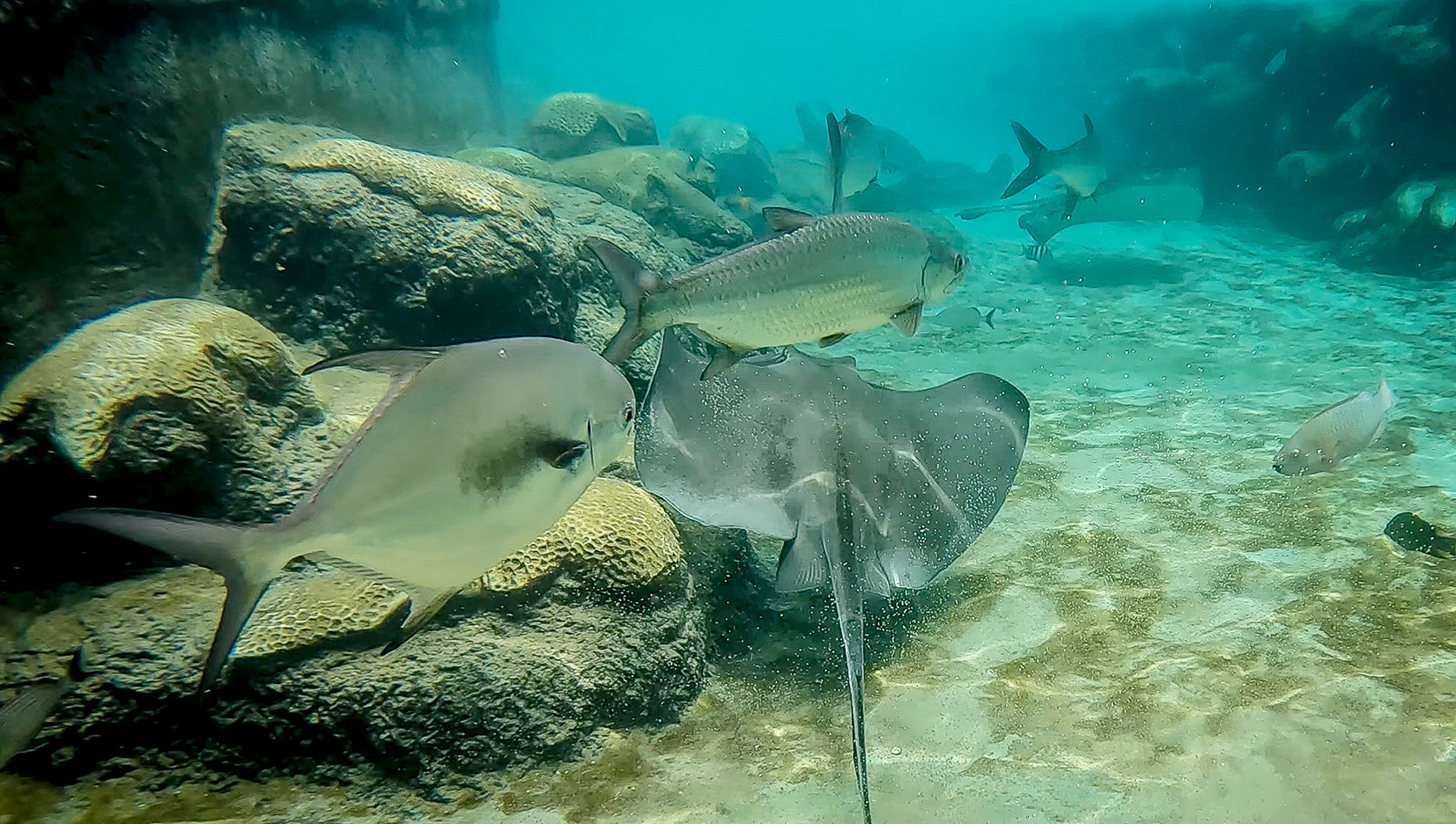
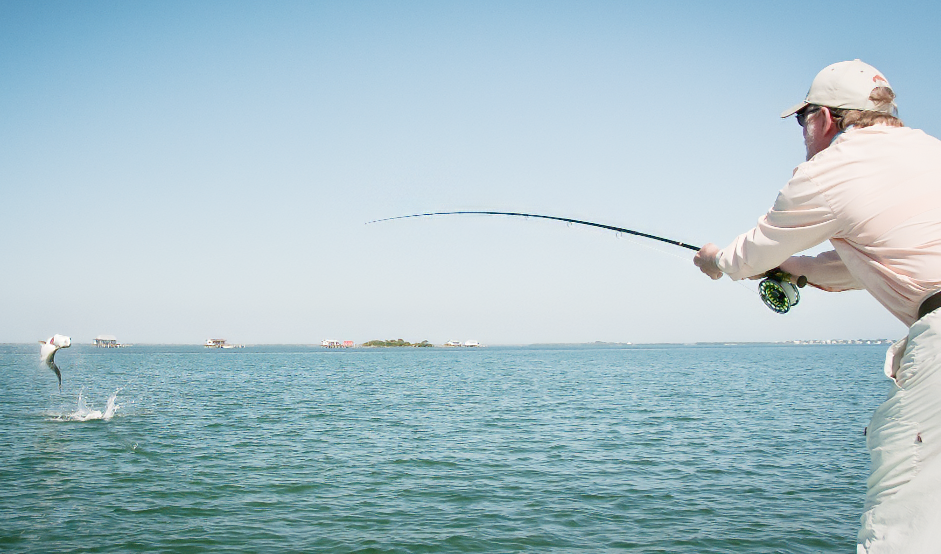
Tarpon are one of the premier gamefish that swim local waters and are a noble adversary on any tackle. The fish that frequent our beaches during the months of May through August can weigh over 200 pounds and average from 80 to 100 pounds.

I’ll always remember the way John Kip, a guide I fished with in the Keys, described fly-fishing for tarpon as the “Apex of Angling.”

Local anglers are blessed with some of the finest tarpon fishing in the world and local sandbars, beaches and bays host worldclass fly-fishing for these silver-plated giants. Our region is also bookended by the legendary flats of Homosassa to the north and Charlotte Harbor to the south, providing fly anglers a proliferation of promising prospects. This isn’t a game of numbers; and to the anglers who pursue tarpon on the fly, it’s the pursuit and the possibility of pulse-pounding action that keeps them on the bow for hours in the sweltering summer sun.

Fly tackle should match the size of the quarry and most anglers opt for a 12-weight outfit and 70-to-80-pound bite tippet. While it might seem like a difficult task to land a tarpon on the fly, an angler who knows the limits of their tackle can actually land a tarpon in a surprisingly short time. The key is to apply maximum pressure from the hookup and never let up. Too many anglers “baby” their tarpon in a misguided attempt to land them. The truth is that the longer you fight a tarpon the better chance you have of losing them.

A properly knotted and tapered tarpon leader usually runs between 10 and 12 feet and includes a class (weakest link) tippet from 16 to 20 pounds. Flies vary from the classic splayed feather “Key’s” style to more complex designs like the Toad and Palolo worm. Key to the whole equation is a razor-sharp hook that can penetrate a tarpon’s rock-hard mouth. Many seasoned tarpon anglers are not concerned with actually landing a tarpon, preferring to just enjoy the hunt, the hook up and the jumps that usually follow the hook set. They use light bite and class tippets which allows the tarpon to work through the leader with their abrasive mouths. 

The key to hooking a tarpon on the fly is accuracy. The fly must be placed perfectly and moved in a precise direction relative to the fish and at the proper depth (the fish’s depth). Even when all of these factors come together, there’s still about a 50% chance that the tarpon will reject the fly.

Patience is a critical factor when fly-fishing for tarpon. Some anglers prefer to locate the edge of a sandbar or other underwater feature that tarpon track, anchor in casting range and wait. Other anglers prefer to be on the poling platform to make short moves to give their anglers a better angle for a presentation. Sometimes tarpon come at a steady rate, but just as often there are long periods of time when the only thing to look at is the water and the bottom. This really separates the great anglers from the good anglers. There are times when you need to move but knowing when and where is a skill that is developed, if never mastered.

Once set up, the angler must be able to make a 40-to-60-foot cast to a location the size of a dinner plate. Placement of the fly cannot be overemphasized, because tarpon will seldom vary a foot or two from their path to eat a fly. Although there is always the rare exception, a fly must never travel in a path towards a fish. A tarpon’s prey species wouldn’t survive long if it moved towards its aggressor, and the tarpon know it. When a tarpon is tracking their fly, seasoned anglers know how to read the fish by moving the fly to attract their attention and then varying the speed to keep them interested.

Note – This story was previously published in 2025.

Jim Costa Memorial Bowlees Creek Cleanup is May 9

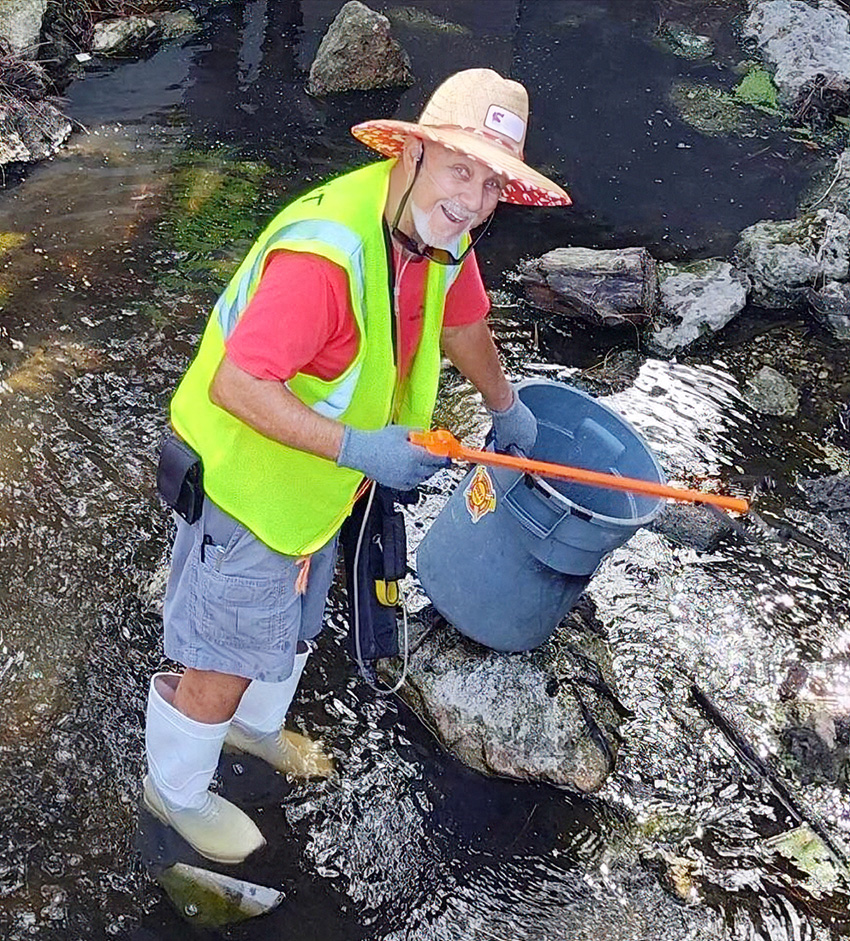
On Saturday, May 9, Suncoast Aqua Ventures will sponsor the Jim Costa Memorial Bowlees Creek Cleanup from 8 a.m. to 1 p.m. at Bahia Mar West Marina at 6918 14th Street West in Bradenton. 

The event is focused on keeping Bowlees Creek “clean and beautiful.” The creek, a 4.8-mile stream in Manatee County, just north of the Sarasota-Bradenton International Airport, is located within the Sarasota Bay watershed and it drains a large area of Sarasota and Manatee County. 

Held in partnership with the Sarasota Bay Estuary Program, the cleanup event is headquartered at the marina’s tiki hut. 

The marina is uniquely located on Bowlees Creek near Sarasota Bay and has private and public slips adjacent to the tiki hut. The cleanup area includes upstream areas within the boundaries of US 301 and State Road 70, and downstream to the mouth of Sarasota Bay, including Bowlees Island. 

The cleanup has been renamed to honor Jim Costa, a longtime supporter, participant and boat sponsor who helped inspire Suncoast Aqua Ventures’ signature event, the Reef and Beach Cleanup. Jim and his wife, Martha, were also dedicated committee members.

Cheryl Huntsinger, president of Suncoast Aqua Ventures, stated that “a major goal of the event is to remove trash from upstream areas before it reaches Sarasota Bay.” 

The event typically draws more than 50 volunteers who use pontoon boats, kayaks, paddle boards and small jon boats to collect debris. The cleanup event is well timed to collect debris that would otherwise create significant pollution when long overdue rains fall this summer. Following the cleanup, Suncoast Aqua Ventures and Bahia Mar West will provide lunch for volunteers at the marina’s tiki hut.

Suncoast Aqua Ventures was created by a handful of friends in 2016 who were concerned about human trash and debris in our waterways. They created a one-of-a-kind competitive event called the Reef and Beach Cleanup. They gave cash and prizes in numerous categories to the teams that competed. All of the cleanup activities are structured to be fun, family-friendly events. 

To date, the events have collected well over 300,000 pounds of marine debris from our waterways. The volunteers come from all age groups and all walks of life and include water enthusiasts, kayakers, fisherman, scuba divers and anyone else who has a passion for our beautiful aquatic ecosystem.

Participants are encouraged to sign up early at the Suncoast Aqua Ventures website.

This is a great opportunity to make new friends, be surrounded by like-minded volunteers and go away knowing you left our local waters better than you found them.

Reel Time: Sister Keys Cleanup 2026

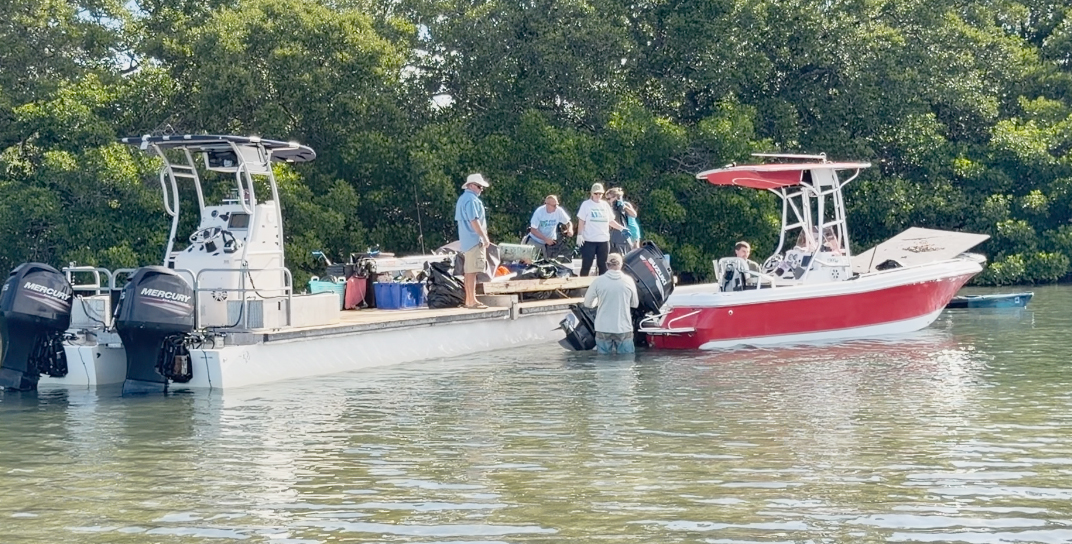
Suncoast Waterkeeper teamed up with Sarasota Bay Watch on Sunday, April 12, to conduct their 17th Annual Sister Keys Cleanup. The event was a collaboration of the two non-profit organizations, the town of Longboat Key, Reef Innovations and the Mar Vista Dockside Restaurant. 

Close to 40 volunteers worked for four hours on the island and around the mangrove fringes collecting trash and recyclable items. 

The four-island, 74-acre Sister Keys located just south of Longboat Pass in Sarasota Bay were originally slated for development in the early 1960s as the Shangri Isle Club and they were once again threatened in 1989 when they went on sale for $1 million. 

That spurred a group of citizens to form the Sister Keys Conservancy in an attempt to buy and preserve the islands as a nature preserve. After a three-year effort to raise funds for the purchase that included bake sales and the Music in the Park series, the Longboat Key Town Commission voted to fund the balance of the purchase price on July 10, 1992.

The islands underwent a million-dollar mitigation in 2007 that removed all invasive species, planted native flora and created a two-acre wetland. Today, mature mangroves dominate the waterways and are rich with crustaceans, minnows, juvenile finfish and wading birds. 

Native species, planted on the uplands that were first created from the dredging of the Gulf Intracoastal Waterway in the late 1800’s, have matured, making the islands one of the best examples of a thriving native marine ecosystem in coastal Florida.

The cleanup is part of an ongoing two-prong effort to clean the islands of trash and prevent the resurgence of invasive species.

Larry Beggs, owner of Reef Innovations, once again provided a barge to pick up bags and debris collected by volunteers along the island. The Longboat Key Police Department provided a boat to slow traffic in the Intracoastal Waterway during the event. In all 2,061 pounds of debris were collected by 44 volunteers.

Following a tradition started by Ed Chiles of the Chiles Group (who still provides parking for volunteers), Beachside Hospitality, the new owners of the Mar Vista, Beach House and Sandbar restaurants provided volunteers a waterfront venue, box lunches and service. 

To learn about upcoming volunteer opportunities, visit the Sarasota Bay Watch and Suncoast Waterkeeper websites.

Rotary Club hosting Reel for Rotary fishing tournament

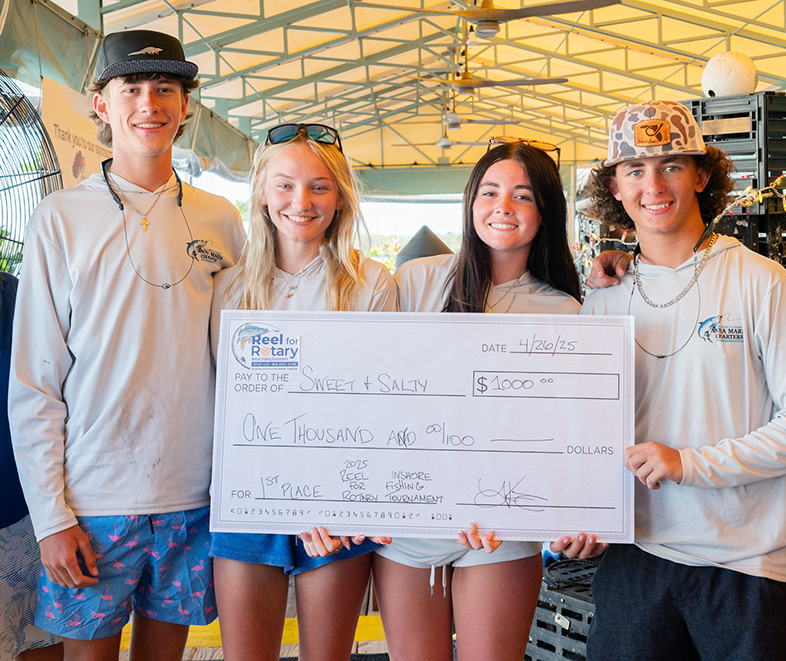
The Rotary Club of Anna Maria Island’s second annual Reel for Rotary fishing tournament is scheduled for Saturday, May 9, and the tournament organizers are still seeking contestants and sponsors.

Serving as one of the Rotary Club of Anna Maria Island’s signature events, the fishing tournament features both inshore and offshore divisions, and anglers of all ages and skill levels are encouraged to participate.

The fishing will run from 6 a.m. to 3 p.m. in Sarasota Bay, Tampa Bay and the Gulf. An awards banquet and silent auction will be held at the Cortez Kitchen in Cortez at 4 p.m., where cash prizes will be awarded to first-place winners in each division. Non-angler tickets for the banquet are also available for $50 per person. 

Incoming Rotary Club of Anna Maria Island President Rebecca Gill heads an active organizing committee that plans and sets up the event, the awards banquet and the silent auction. 

Captain Laura King, of Anna Maria Charters, organizes the guides, judges the fish and works with the committee creating swag bags, getting sponsors and soliciting donations.

In addition to angler participation, sponsorship opportunities are available for businesses and individuals who wish to support Rotary’s mission. Sponsors play a vital role in helping the club continue its six-decade legacy of service and outreach.

Proceeds from the tournament will benefit a wide range of impactful Rotary Club initiatives, both locally and globally. These initiatives include the Manatee Beach Patrol drone water rescue program, Anna Maria Elementary School, youth leadership development programs, disaster relief efforts and international water and health projects.

Founded in 1966, the Rotary Club of Anna Maria Island’s mission is to strengthen the lives of children, assist people in crisis and improve the quality of life of special needs individuals. 

The Rotary Club of Anna Maria Island currently meets the first and third Tuesday of each month at the Beach House restaurant in Bradenton Beach. The twice-monthly noon meetings are well attended and sometimes include visiting Rotarians from around the world. 

Over the past 60 years, the AMI Rotary Club has played an active role in supporting the community through countless efforts. Highlights include providing hurricane relief following the devastating 2024 storms; helping send hundreds of children to learn vital water safety skills through the “Learn to Swim” program held in collaboration with the Bradenton YMCA; providing humanitarian aid to war-affected communities in Ukraine; and raising funds to support Rotary International’s global polio eradication campaign.

“As we celebrate 60 years of serving the Island community, this tournament is not only a fundraiser but a reflection of our ongoing commitment to making a difference,” Gill said. “Our club may be small, but the impact we make is significant, from responding in times of crisis, to investing in the health and future of our community locally and around the world. We invite the community to join us as we celebrate 60 years of service and tackle community needs together, one cast at a time.”

The fishing tournament is a great way to support Rotary’s work and the local community while enjoying some of the excellent fishing that Anna Maria Island is famous for. You can register to join the tournament, become a sponsor and/or donate at the tournament website.

Planning a successful fishing adventure

The transition from spring to summer is a time when many anglers start planning fishing trips. 

Whether it’s a trip to a location in Florida for bonefish and permit, the West for trout, or Alaska for salmon, proper preparation is essential to assure that the time, money and effort involved pays dividends in catching fish and the overall experience.

Planning any fishing trip can be a challenge, given the peculiarities of weather and the idiosyncrasies of fish. Add a few thousand miles, a different language and an exotic species or two; and some serious planning is advisable.

Chances are you’ve been looking forward to this trip for a long time and finally have the opportunity to fish, eat, sleep and repeat for a week or more. It makes good sense to develop a plan to ensure that you have the best possible chance of success.

Deciding where to go, and when, are your first decisions. While it’s not impossible to book your own trip, knowing the best time, tides and lodging can be daunting. In addition, juggling the details of plane reservations, transfers, accommodations and guides can complicate organizing a trip.

A knowledgeable outfitter or travel host can provide the experience and inside information that will allow you to immerse yourself in the experience, instead of the details. Even when using an outfitter, you’ll need to do some research to ensure you’ve matched your angling needs and expectations to your chosen destination. There are a lot of resources online, including some great groups on Facebook, but you’ll need to vet your sources carefully.

If you require a certain level of service, or are traveling with non-fishers, you’ll want to research locations that offer certain conveniences, as well as good fishing.

It can be helpful to talk to others you trust and have similar expectations when you’re planning. You can also reach out to an outfitter or host for several references and question them carefully. Make sure they have been to the location recently – and at the time of the year you plan to visit. Online references and referrals may be helpful too; but be careful of the source.

In foreign countries, even as close as the Bahamas, you’ll be hard-pressed to replace items you forgot to pack, particularly fishing tackle. 

This is one case when it’s probably better to pack more than you think you’ll need. Making a packing list and checking it before your departure will pay dividends. In any case, be reasonable about what you pack – as in, “it’s better to have it and not need it, than need it and not have it!”

Many tropical fishing destinations are very near the equator, so anglers need to pay special attention to the sun. Cool and comfortable long-sleeved pants and shirts for sun protection are a must, along with a high SPF waterproof sunscreen.

Polarized glasses with glare guards and a fishing hat with a dark underbrim are mandatory and bringing a second pair of each is advisable. 

You can be a consummate planner, have beautiful weather and terrific fishing and still have a frustrating and unsuccessful trip if your cast isn’t up to par. Pay special attention to casting into the wind and being able to place an accurate 40-foot cast. Practicing these skills well in advance on grass will greatly increase the pleasure of your adventure wherever you go.

The success or failure of any fishing adventure will vary due to conditions beyond your control but being mindful of the things you do have control over can make or break your trip. Be prepared, practice casting, do your homework up front, ask good questions from knowledgeable sources and be flexible. The time and effort you expend in planning the trip will pay dividends of tight lines, screaming drags and lasting memories.

Mangrove Coast Fly Fishers host fly-casting clinic

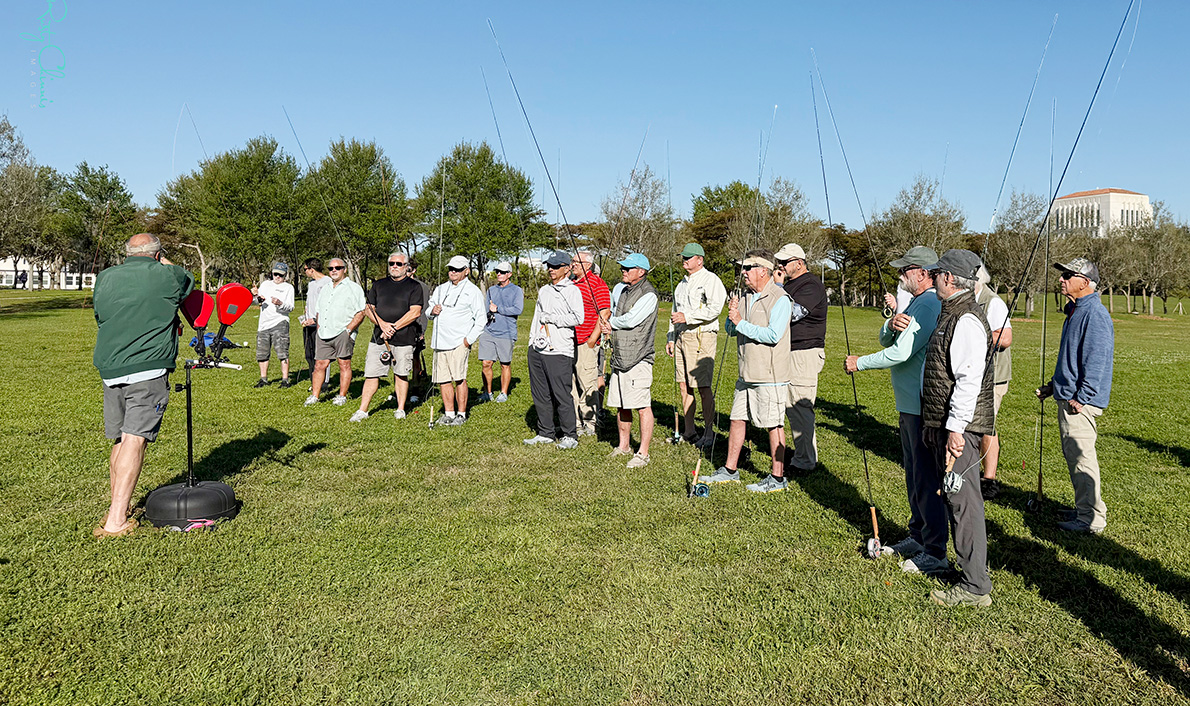
On Saturday, March 21, the Mangrove Coast Fly Fishers club, a charter club of the Fly Fishers International (FFI) organization, sponsored a free fly-casting clinic. The annual event attracted close to 30 participants from both the club and the public at large. 

I participated as an instructor and was joined by FFI instructors Captain Pete Greenan, Captain Rex Gudgel, Captain Rick Grassett, Jim Cannon and Pat Jones. The event was held at Payne Park in downtown Sarasota from 9 a.m. to noon.

The morning started with an introduction by Cannon, who went through the fundamentals of a proper cast. While fly casting can be said to be an art, there are physics at play that must be observed. They are referred to as the five essentials and are as follows: 

1.) There must be a pause (to let the fly line fully unwind) at the end of each casting stroke, which varies in duration with the amount of line beyond the rod tip. 

2.) Slack line should be kept to an absolute minimum in the casting stroke. Slack line prevents the rod from loading and applying power to the cast. Common mistakes include not anchoring the line against the rod or with the rod hand; movement of the line by outside forces like wind and water; starting the cast too high; rough, jerky application of power; and poor timing between the forward and back cast. Of these, the most common comes from starting with the rod too high, which forms a belly in the line between the rod tip and the water. To prevent this, start with the rod tip pointing at the water. 

3.) To form the most efficient, least air-resistant loops, and to direct the energy of the cast toward the target, the caster must move the tip in a straight line. 

4.) The size of the casting arc must vary with the length of line past the rod tip. If you are making a short cast there is only a small amount of line needed and only a small casting arc is necessary to load the rod in a straight line. As the length of line increases, the stroke must be increased to load the rod. Participants were reminded, short cast-short stroke, long cast-long stroke. 

5.) Power must be applied in the proper amount at the proper place in the stroke. In general, the power is applied slowly at first, gradually increasing to a peak at the end of the stroke. There should be a crisp stop at the end of the stroke, forcing the rod to come out of its bend. This is commonly referred to as the speed-up and stop.

After discussing the fundamentals, the participants broke into groups and the instructors worked with the individuals according to their needs and what the instructor determined would help their casting. While many of the group knew the fundamentals of the cast, the instructors worked to help them tighten their loops, control their line and double haul. Instructors also helped the participants work on how to make the most efficient cast when dealing with injuries to an arm, elbow or shoulder.

The event was a big success, judging by the performance of the casters before and after the clinic. While there was much improvement, instructors were adamant that the fly casters practice often to improve their skills.

If you are interested in joining the Mangrove Coast Fly Fishers or attending their meetings, check out their website. The club meetings are held on the fourth Wednesday of the month at the Sarasota Garden Club. Casting and fly tying begin at 6 p.m. The meeting begins at 7 p.m. and usually includes a presentation on some aspect of fly fishing.

Reel Time: Remembering Captain Zach

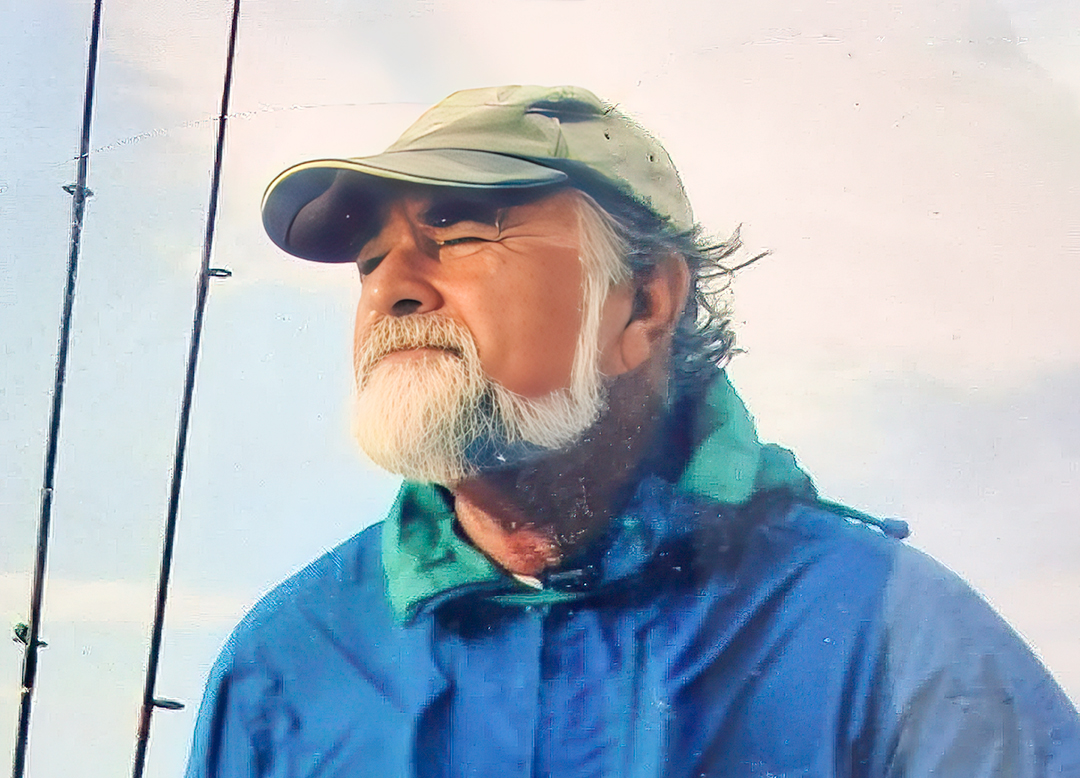
On Thursday, March 5, we lost one of the area’s earliest and most ardent defenders of the marine resources that make our Island home so special. 

I first met Captain James “Zach” Zacharias when I began my career writing about fishing in a column called “Backlash” for the Longboat Observer in the 1980s. Captain Zach was a reliable source for my Captain’s Report and he was someone who shared my passion for fishing and protecting the local fishery. That passion led both of us into the ongoing fight to protect water quality and the habitat that safeguards that resource. Everyone who enjoys a day on the water owes Captain Zach a debt of gratitude for his service that inspired me and many other local environmentalists.

I asked several of his friends to share their memories of Captain Zach – testimonials that speak to the remarkable nature of a humble man who loved fishing and the marine environment and worked tirelessly to protect it.

Captain Justin Moore: Zach was one of the humblest fishing guides you’ll ever meet. I remember vividly one time he took me fishing and let me drive his boat from Cortez to Longbar when I was 10 years old. We caught fish for hours. Zach was a kind soul with a gentle voice. He was always willing to have breakfast and coffee and talk about the good old days of fishing.”

Captain Scott Moore: Zach was a special guy. He was a very good captain, good with people and he fished hard. He loved to catch a variety of fish and was a very good cook as well. I spent many hours talking to him about my ancestry in Cape Cod. If I had questions, he could answer them about my family’s hometown. He’s going to be missed. He represented the guiding and fishing community, working hard to protect what we all love about this area.

Merrie Lynn Parker: Captain Zach sat on Manatee County’s first Environmental Land Management and Acquisition Committee (ELMAC) with my husband, Chick Parker, and he was an active member of Manatee Fish & Game Association. Zach was a fantastic fisherman, but more importantly, a strong and passionate advocate for our area’s natural resources, specifically wildlife habitat. He was a true man of the sea and understood the interdependence and fragility of the ecological coastal and upland world we are blessed with in Manatee County. Zach worked diligently on both the Emerson Preserve and the Duette Preserve management plans. Zach was a man of stature and humility.

Angela Collins: Captain Zach was an active member of the Sea Grant advisory committee under John Stevely and me. Zach provided a lot of honest guidance on issues that were important to fisheries. He was also a supporter of the Florida Institute of Saltwater Heritage (FISH) and was a reliable member of both organizations.

Captain Scott Greer: Manatee County lost one of its finest. Captain Zach was an excellent guide and put a smile on thousands of customers’ faces over the last 50 years. He was also very involved in conservation and water quality issues. That was back years ago, before most people realized how important water quality was and it wasn’t a very popular issue. We all owe him many thanks for some of the work he was involved in. 

Captain Jonnie Walker: Captain Zach was one of the area’s finest guides. I first met him in the early 80s through Judge Lynn Silvertooth and always admired his dedication to the environment. He was always the nicest and most positive guy. He was never in competition with the other guides; he was just one of us. I particularly liked working with him when he took over the fishing report for the Sarasota Herald-Tribune after Steve Gibson’s passing.” 

On a more personal level, Zach and I had coffee in the morning at the Cortez Café for several decades and had many lively conversations and shared many laughs. He will truly be missed as a fellow guide and as a true friend. 

Captain Zach’s legacy can be honored by all who love the Suncoast by continuing his work to protect the waters that benefit us today and all future fishermen. There will be a celebration of life for Captain Zach in the spring.

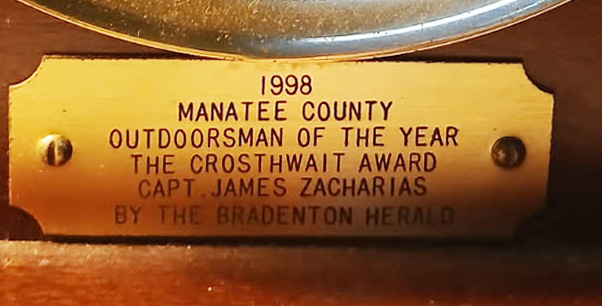
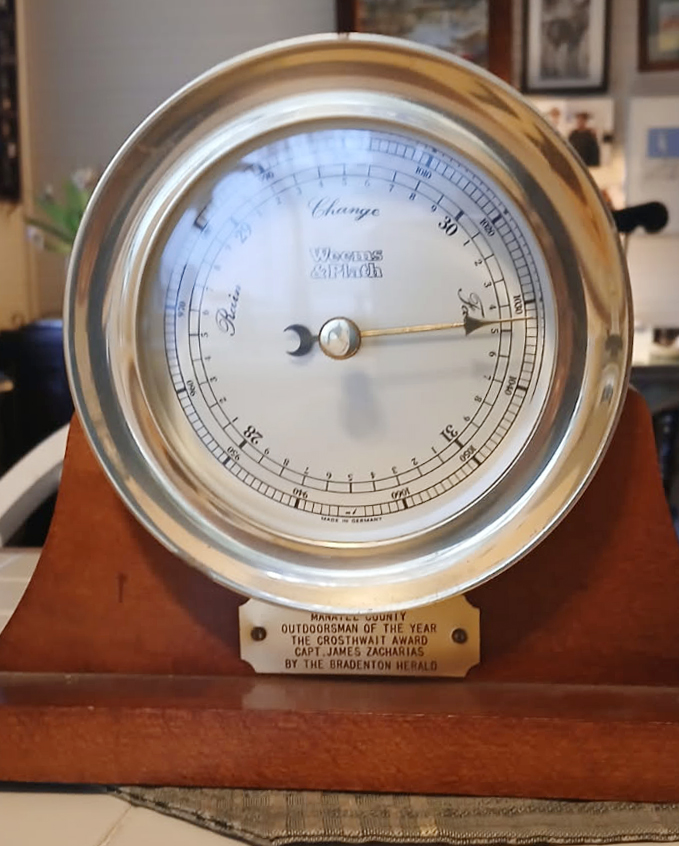
James “Zach” Zacharias was Manatee County’s Outdoorsman of the Year in 1998. – Submitted
James “Zach” Zacharias won the Manatee County Outdoorsman of the Year award. – Submitted
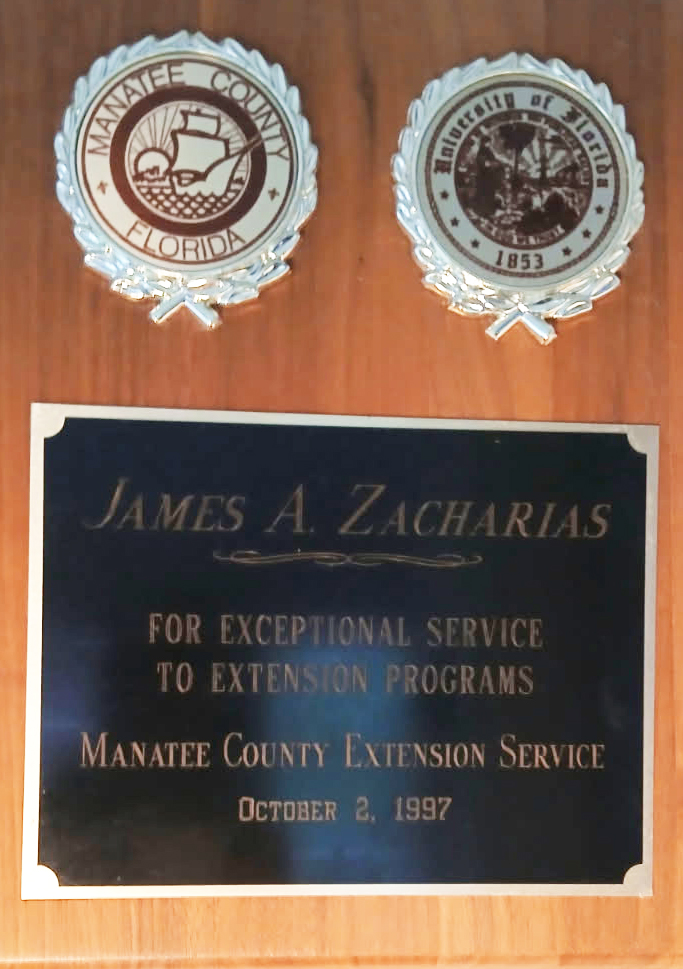
James “Zach” Zacharias was recognized for his exceptional service in 1997. – Submitted

Reel Time on The Road: Fishing the Chass

Locally, we’re blessed with an amazing fishery and a natural world that supports it. As good as the fishing can be close by, every angler has an urge to experience someplace that’s unique, less crowded and rich in wildlife and fish. 

If you’re thinking Cuba, the Bahamas, Belize or Argentina, you’d be right. You might also be surprised that such a destination exists less than two hours to our north. Aptly branded the “Nature Coast” by the chamber of commerce, this region is noted for its springs, rivers, wildlife preserves and manatees. Anchored in the south by the Chassahowitzka National Wildlife Refuge, and to the north by Waccasassa Bay, the coast harbors the popular tourist destinations of Homosassa and Crystal River, but also miles of wild coastal habitat teaming with redfish, trout, snook and tarpon (seasonally).

At the beginning of March, Captain Rick Grassett and I joined our friend, Captain Bryon Chamberlin, for two days of exploring the extreme backwaters of Chassahowitzka Bay. 

By extreme, I mean the kind of water I would never attempt to reach in my boat (if I could) and an area where you can fish all day and never see another boat nearby. That’s made possible with Chamberlin’s 17.5-foot Sabine – an all-aluminum flats boat that’s powered by a Gator Tail 40 HP outboard motor, giving him access to waters only inches deep. That’s a tall order in an area studded with limestone reefs, rock hard bottom and oyster beds.

When I inquired about a trip in the early winter, Chamberlin suggested a couple of days at the first of March when he targets large snook. His strategy is to mine the deep basins and pools that dot the refuge and provide sanctuary to fish on the low winter tides. While the fishing is definitely the focus of the trip, I always find myself exclaiming that the ride alone is worth the “price of admission!” 

Chamberlin has been fishing the area for several decades and he’s also an avid photographer and naturalist, as well as an accomplished guide. The day’s main targets were reds, trout and snook, but pursuing them was blended with scenic rides through the rich habitat replete with bald eagles, hawks, river otters and manatees.

We departed each of our two morning trips from the Chassahowitzka River Campground, where Chamberlin launches his boat. The campground and ramp are located on the banks of the Chassahowitzka River that’s formed from numerous springs, giving access to the larger preserve. 

We started the first day early enough to take advantage of the light for photographing the scenic river and its inhabitants, encountering eagles, kingfishers, herons and otter along the way. When the light was up, we motored into the far reaches of the preserve where only fools and knowledgeable guides fear to tread. We found the action a bit slow for the redfish and trout we expected, but the snook fishing, while not red hot, yielded the largest snook on the fly for both of us. Before noon, I hooked and landed a 34-inch snook and Grassett landed one a bit over 33 inches.

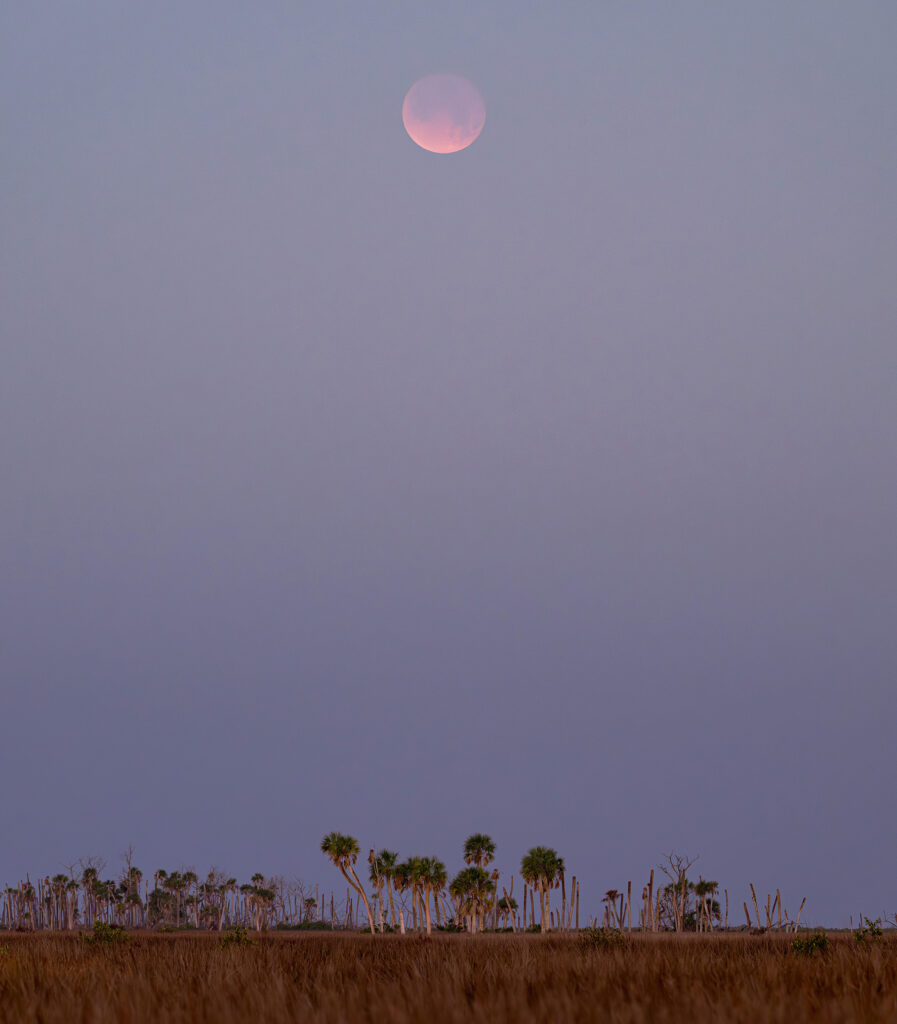
Our second day started at 5:30 a.m. so we could photograph the lunar eclipse and “blood moon” deep in the refuge at dawn. Chamberlin had scouted out a location where he could frame the setting moon with a faraway palm hammock. The ride in darkness down the sinuous river was only illuminated occasionally when the setting moon was eerily reflected on the water’s surface as our guide’s spotlight scanned the shoreline. After a 20-minute ride that would have been harrowing if not for our confidence in our guide, we landed at the chosen spot and set up tripods.

Byron Chamberlin photographed the “blood moon” and the lunar eclipse from a boat on the Chassahowitzka River, a couple hours north of Anna Maria Island. – Byron Chamberlin | Submitted

The experience was unique and picturesque in the predawn light; and after our photo session, we were treated to a ride through the twisting waterways that weave and embroider this “untouched” natural wonderland. While we waited for the tide to drop, we reveled in the photographic opportunities the area provided as we sought out the eagles, wading birds and other raptors that make this area home.

The fishing proved both challenging and productive as redfish and trout were again elusive. Chamberlin knows the area well and his local knowledge allowed him to bounce from spot to spot where we all managed to catch nice snook, a few trout, ladyfish and one redfish. True to form, our trip back to the ramp that afternoon was an exciting journey through twisting channels, sharp bends and narrow passages.

I highly recommend a trip (or trips) to this productive and breathtaking part of Florida that’s only a short trip to our north. The opportunities abound from Chassahowitzka to Cedar Key. A quick look at a map will confirm my recommendation!

Rusty Chinnis shared this video of their Chassahowitzka explorations.

On the Cusp: legislative action needed

While we’re still on the cusp of some of the year’s most exciting fishing, let me encourage you to express your opinion to your local state representative, Will Robinson Jr., on a very important issue that is addressed in Suncoast Waterkeeper’s February newsletter: adopting new legislation that fixes the state law created in 2025 by the Florida Legislature and Gov. Ron DeSantis’ adoption of Senate Bill 180 . 

The Suncoast Waterkeeper newsletter says, “For those familiar with the Save Our Wetlands campaign in Manatee County, Senate Bill 180 will carry heavy connotations. Last year, SB 180 is exactly what prevented Manatee County Commissioners from reverting wetlands buffer protections back to their previous state.

“Senate Bill 180, Section 2(b) states: ‘For one year after a hurricane makes landfall, an impacted local government may not propose or adopt: A more restrictive or burdensome amendment to its comprehensive plan or land development regulations.’ This language prevents counties (and cities) from taking action to protect wetlands and wetland buffers, among other things, which are crucial in maintaining coastal resiliency,” the newsletter says.

“Suncoast Waterkeeper has been sharing an action alert from 1000 Friends of Florida which aims to find a fix for last session’s SB 180. As of now, Senate Bill 840 offers the chance to restore limited, but essential local planning authority. But Senate Bill 840 cannot be passed without a companion in the House. Enter House Bill 217. 1000 Friends of Florida suggests this would be the best option to put on the agenda and amend language to match SB 840,” the Suncoast Waterkeeper newsletter says. 

“To be clear, this is the only pathway to restoring Manatee County wetland buffer protections any time soon. Many representatives haven’t prioritized fixing SB 180 because they don’t see or experience the damage it has done to local planning efforts to safeguard our communities against increasingly extreme weather conditions. Write to the chair and members of the Intergovernmental Affairs Subcommittee and share how SB 180 has impacted our life here on the Suncoast, respectfully request that they put HB 217 on the agenda and amend it to match SB 840,” the newsletter says.

“A special shout-out and appreciation to Manatee County Commissioner George Kruse for his unwavering leadership on this issue. If we want the House to act, they must hear from you!” the newsletter says in closing.

State Rep. Berny Jacques chairs the House Intergovernmental Affairs Subcommittee. The phone number for his Tallahassee office is 850-717-5059 and his email address is berny.jacques@flhouse.gov. The phone number for Will Robinson’s Tallahassee office is 850-717-5071 and the number for his Bradenton office is 941-242-8430. Robinson’s email address is will.robinson@flhouse.gov.

There are so many important issues now, including the proposed cruise ship port and preserving the home rule rights that would allow reversing the county’s wetland setback reductions. It’s never been more important to stay informed and act to protect the waters we call home. Let’s make sure our actions today ensure an exciting fishing future for generations to come.

The Waterman 2026: Fishing for a purpose

The annual Waterman Fly Fishing Tournament was held Friday and Saturday, Feb. 20 and 21. The two-day, fly-only Redfish tournament with a Snook Calcutta was a sellout, with a total of 150 anglers and 77 teams.

The fishing boundaries were wide-ranging and included the west coast of Florida, from Crystal River to the southernmost tip of Sanibel Island. The photo submission format and the use of the iAngler Tournament phone app made it possible for fishermen in this entire range to participate.

The tournament culminated in an awards banquet and raffle at the Bradenton Yacht Club on Saturday evening with special guest Andy Mill – tarpon angling phenom and co-host of the popular Mill House Podcast with his son, Nicky.

Mill participated in a question-and-answer session with tournament founder and Tampa Bay Waterkeeper (TBWK) Chairman Adam Fernandez and members of the audience. 

This year’s tournament took on special significance with the looming threat of the proposed Knott-Cowen Cruise Port, which has been covered in this space and will remain a focus going forward. 

The 150 anglers, fishing mostly in teams of two, received a tournament shirt, a Tampa Bay Waterkeeper cap, dinner for two at the awards ceremony and one raffle ticket for each angler. Target species were redfish and snook. Scoring was done by the highest combination of the two longest redfish caught between day one and day two.

Fernandez, in his introduction at the evening’s awards ceremony and raffle, went out of his way to thank TBWK Executive Director Justin Tramble for his efforts. Tramble “has taken my idea for a tournament to the next level,” he said. 

Tramble was up next and he credited his wife Rebeka, the volunteers and the many anglers who have made his efforts, and those of the organization, bear fruit. 

According to Tramble, “This annual gathering of fly-fishing anglers – some of the best in the state – drives our organization’s fight to protect our local marine habitat. It’s an exciting opportunity to shine a light on Tampa Bay and our surrounding waters. As the continued fight against the Skyway cruise port takes shape, events like the Waterman fuels our ability to stay in the fight.” 

The winner of the Snook Calcutta was Greg Dini with a 40-inch linesider. The largest redfish was landed by Kyle Nalls and measured 36.75 Inches.

OVERALL TEAM WINNERS

Team TBS Beverage, consisting of anglers Sean Kersting and Trip Saunders, captured first place with a combined length (two redfish) of 67.5 inches. 

Team Darkhorse, consisting of anglers Vince Azoy and Kyle Nalls, won second place with a combined length of 62 inches. 

The third-place winner was Team Triple B anglers Christopher Dierlam and Greg Peterson, with a combined length of 61.75 inches. 

Special thanks are in order for everyone who participates in and supports the tournament and those who are working tirelessly to protect the waters and habitat of the Tampa Bay region. 

To join in the protection of local water visit the Tampa Bay Waterkeeper and Suncoast Waterkeeper websites. 

Scallopalooza 2026: “Taking Action to Preserve Our Bay”

On Saturday night, March 7, Sarasota Bay Watch will hold its 16th annual major fundraising event, Scallopalooza. This year’s theme is “Taking Action to Preserve Our Bay.”

Scallopalooza is an annual fundraising gala that directly supports Sarasota Bay Watch’s mission to protect and restore Sarasota Bay through habitat restoration, water quality improvement, marine debris removal and environmental education programs.

Scallopalooza 2026 will be held at the Sarasota Municipal Auditorium and the doors open at 5:30 p.m.

Held annually in Sarasota, each year’s Scallopalooza brings together supporters, community members and conservation advocates for an evening of fundraising and celebration.

Individual tickets are $150 and the price decreases for tickets purchased for groups of six, eight or 10. Tickets can be purchased at www.sarasotabaywatch.org.

Your Scallopalooza ticket gives you access to the full gala experience, including an open bar, craft cocktails, great food, silent auction, raffles and the opportunity to support Sarasota Bay Watch’s conservation initiatives.

The event is a coastal casual gala-style event. Guests are encouraged to wear relaxed yet stylish attire suitable for an evening by the bay. Coastal casual may include sundresses, linen shirts, lightweight button-downs, polos, dressy sandals or loafers. Comfortable, breathable fabrics and beach-inspired colors are perfect for this fundraising event.

Besides individual participation, Scallopalooza offers multiple sponsorship opportunity tiers for businesses and organizations that want to support Sarasota Bay Watch while gaining visibility in the community. Sponsorship packages include event recognition, marketing exposure and additional benefits.

All guests can participate in the silent auction and raffles during the event. These fundraising activities help generate additional support for Sarasota Bay Watch’s conservation programs.

If you would like to get involved with the work Sarasota Bay Watch is doing to protect Sarasota Bay, and support their mission, visit the Sarasota Bay Watch website.

Make sure you take note of the organizations that are major sponsors of this important fundraising effort. As their motto says, “A healthy bay is everybody’s business,” literally and figuratively! I hope to see you there.

Reel Time: Think like a fish

Fishermen are forever trying to divine the secrets of fish behavior in an attempt to fool them into taking our submissions of fur and feather, lures in a kaleidoscope of shapes and colors or live offerings of their favorite prey. 

Conversations on anglers’ boats revolve around declarations like: “They should be coming into those pot holes as the tide rises,” “This cold weather will have them warming up over dark bottom,” “The action will slow down as the tide slacks” and “All we have to do is stay on this edge until an hour into the falling tide and they will pour out of the bay.”

The more time you spend on the water mindfully observing the interplay of tides, wind, weather and fish behavior, the better your chances of success. It’s the best chance we have of divining this intricate interplay of causes and conditions in an attempt to “think like a fish.”

Some anglers catalogue their experiences in their head, while others keep logs to document fish activity and others just go to spots where they’ve found fish before. 

Fishing guides, whose profession centers around putting their anglers on fish, develop some of the clearest insight into the behavior of fish. They have the advantage of watching fish behavior from day to day. 

While more “mindful” time on the water will improve your odds at success, the truth is that when you think you’ve hacked the secret you’ll discover it’s more complicated than you know, and really more complicated than you can know. That’s what keeps it interesting and that’s why there are so many lures, flies, lines, rods, reels and “experts” out there. 

Some “truths” about fishing I’ve observed over a few decades come from friends, experience and even songs. Captain Rick Grassett coined a phrase that’s obvious but prescient: “You don’t know until you go.” Experience has shown me that you should give any spot that your intuition draws you to some time. You definitely won’t catch fish if you’re running constantly; your line needs to be in the water. 

Songwriter and singer Bill Withers’ lyric, “Good things come to those who wait, but not to those who wait too late,” also resonates. We need to give any spot a chance, but we also need to realize when it’s time to relocate. 

That’s what we love about fishing. Experience definitely improves your odds, but we’ll never actually “hack” the solution to finding hungry fish that are willing to accommodate our passion. 

Still, never give up trying to “think like a fish.”

The Cruise Port: A Cautionary Tale

By now, most of you are probably aware of the proposed cruise port that would be adjacent to Rattlesnake Key and the Terra Ceia Aquatic Preserve.

This port, as it is envisioned, would handle the new class of cruise ships that are not able to sail under the Skyway Bridge. With a clearance of between 175 and 190 feet, depending on the tide, passing under this bridge is awe-inspiring. The thought that ships like Royal Caribbean’s Icon of the Seas, at almost 250 feet tall, would be diverted to rest at port just north of this vital preserve boggles the imagination. 

I’ve fished these waters for almost four decades and regularly take friends and guests there to show them what I consider the best of Manatee County’s many unique natural resources.

Rattlesnake Key was recently purchased by SSA Marine, through a subsidiary called the Rattlesnake Key Preservation Company, ostensibly “to preserve the island’s natural character and keep it in long term conservation for public enjoyment,” according to a company statement. In my opinion, it appears the real reason was to help justify the destruction that will be required to build the port they are proposing.

How we got here in the first place strikes me as very suspicious. Had Rattlesnake Key been protected prior to this proposal, all this would have become a moot point. 

In 2022, in partnership with State Rep. Will Robinson Jr., Senator Jim Boyd secured $23 million in state funding with the goal of purchasing Rattlesnake Key. The sale then failed due to a low appraisal by the state. 

As Boyd notes in a recent opinion piece, “Buying the property would have forever prevented development, ensuring its protection for generations to come.”

In 2024, they tried again with state funding and a commitment from Manatee County. This failed again due to the disparity between a low state appraisal and the asking price of the 700-acre property. 

The state’s recent purchase of four acres in Destin for $38 million, and a state appraisal that justified it, raise serious questions in my mind about how we value land in Florida and the politics that can influence these decisions. 

The state values land partly due to its development potential, which in this case shows how that system is flawed. Originally purchased for approximately $8 million in 2016-2017, there have been questions raised about the prior owner’s political donations. 

The opposition to the port proposal has been broad and swift, but I worry that deep pockets and political influence might affect the final decision. 

Manatee County’s future depends on the natural resources that define and draw visitors and residents to our county. The long-term health of our natural resources and their connection to our economy cannot be overstated. 

People travel to and settle in this area because of the natural coastal beauty of the  places we’ve preserved – like Neal Preserve, Perico Preserve, Robinson Preserve and Emerson Point. 

In my opinion, the development of a cruise port near Rattlesnake Key and the Terra Ceia Aquatic Preserve would be a travesty that would degrade this rare coastal habitat and be a long-term negative for our economy. 

It’s important that we stay on top of this unfolding story. Attend meetings to express your opinion, write letters to decision makers, sign petitions and join and support organizations like Tampa Bay Waterkeepers and Suncoast Waterkeeper who will be leading the fight against this misguided proposal.

Reel Time: The Price of Inattention

I first wrote an article with a similar title more than four and a half years ago, but I thought it was appropriate to revisit that topic given the constant challenges facing anglers and the waters that we fish.

Those anglers who have fished the waters of Sarasota and Tampa Bay (and all the connected bays) for decades have seen firsthand the decrease in water quality, loss of habitat and the resultant degrading of local fisheries. 

Don’t get me wrong, we still have some excellent fishing and the habitat that has been referred to as “fragile” turns out to be extremely resilient. That’s the good news, but only if anglers stay engaged in protecting “the goose that laid the golden egg.” 

The problem lies in the perception of anglers and residents who recently relocated here, and this is nothing new. When we’re new to an area (now or four decades ago), we experience what is referred to as “the new normal,” or the “shifting baseline” – a phenomenon in which each generation accepts a degraded or altered condition as “normal” because they compare it only to what they have personally experienced, and not to historical conditions.

This became clear to me only recently, when I read Jack Davis’ Pulitzer Prize-winning book “The Gulf: The Making of an American Sea,” a book described as a work that powerfully illustrates shifting baselines – how each generation accepts a diminished Gulf as “normal.” 

I vividly remember accounts (paraphrased) by early settlers of flocks of birds so abundant they would darken the midday sky, and mullet so thick you could almost walk across the bay on their backs.

This is not intended to make anglers nostalgic for what has been lost, but to realize we can enjoy our angling adventures even more by working to protect and improve what we love, so future generations of anglers can have some of the opportunities we enjoy. 

Reel Time is, and I intend it to continue to be, a way to share the adventures of angling, help introduce new tackle and techniques, explore destinations and introduce children and new residents to this amazing resource that surrounds us. A vital part of that mission also needs to explore the challenges that face us and share ways to protect it.

Reel Time: Why Mullet Jump

Reel Time: Why Mullet Jump

While I was sitting by the bay the other day a mullet jumped right in front of me. That’s not unusual if you spend anytime near the water, and it elicited memories of stories I’ve heard over the years that sparked my curiosity. 

The first explanation I remember was from the longtime outdoors editor of the Bradenton Herald, Jerry Hill (from the late 1970s until his passing in 2009). A man with a vibrant sense of humor, Hill explained how mullet were vegetarians and eating all those veggies caused them to be flatulent. Releasing that gas was what propelled them out of the water.

Humor aside, I decided to do a search and came up with probable causes: it helps them supplement their oxygen (the theory being they spend a lot of time in warm, cloudy, oxygen-poor water); jumping helps them shed parasites, avoid predators and maybe even helps them see where they were going! 

Since I was seeing them jump in clear, cold water I discounted the supplementing O2 theory. I reached out to some commercial fishermen and anglers that I know and respect to get their takes. A highly respected guide who is by nature very observant (he also commercially cast netted) told me he thought it served the purpose of helping them digest their food, since mullet are one of the only fish with a gizzard. Additionally, he suggested it helped them communicate, as he has observed that males and female jumped at different times, especially when they were in spawning populations.

When I called a Cortezian friend who grew up in the village and asked him, he responded, “You want me to ask a Cortezian why mullet jump?” We had a good laugh over that and hung up. The next day he called to say he had reached out to the oldest and most knowledgeable commercial fisherman in Cortez and got a response. The explanation he offered was that after a lifetime of observing and pursuing them, he believed they jumped to communicate. 

Amazingly, I got this call while I was sitting by the bay – and as if the mullet were privy to this conversation, a number of them started to jump right in front of me. 

When I looked up, I saw a boat with two commercial cast netters approaching about two hundred yards in the distance. As the boat came closer the mullet stopped jumping, as if they had alerted the school and were hiding as the boat closed in. A coincidence? Maybe. But I’m guessing that if we want to know for sure we’ll have to ask a mullet!

Do you have a theory? Have you spoken to a mullet recently? Feel free to share a comment at this week’s Reel Time column posted on the Anna Maria Island Sun Facebook page.