Tag: Reel Time

Mangrove Coast Fly Fishers host fly-casting clinic

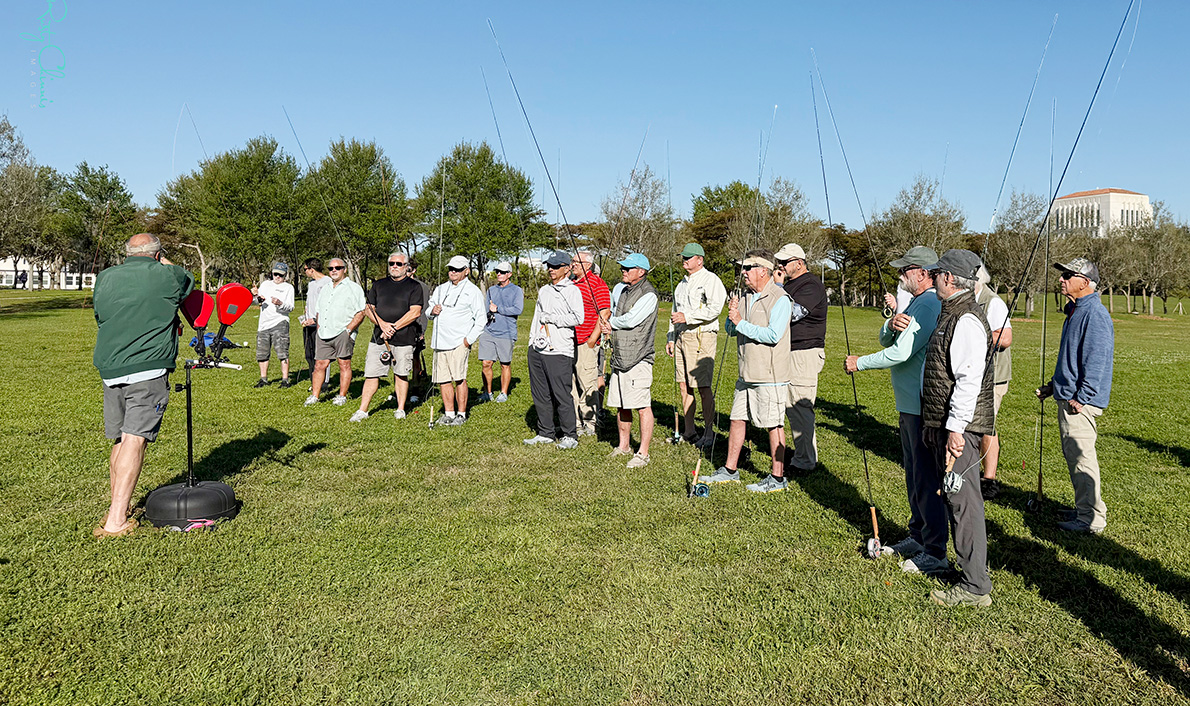
On Saturday, March 21, the Mangrove Coast Fly Fishers club, a charter club of the Fly Fishers International (FFI) organization, sponsored a free fly-casting clinic. The annual event attracted close to 30 participants from both the club and the public at large. 

I participated as an instructor and was joined by FFI instructors Captain Pete Greenan, Captain Rex Gudgel, Captain Rick Grassett, Jim Cannon and Pat Jones. The event was held at Payne Park in downtown Sarasota from 9 a.m. to noon.

The morning started with an introduction by Cannon, who went through the fundamentals of a proper cast. While fly casting can be said to be an art, there are physics at play that must be observed. They are referred to as the five essentials and are as follows: 

1.) There must be a pause (to let the fly line fully unwind) at the end of each casting stroke, which varies in duration with the amount of line beyond the rod tip. 

2.) Slack line should be kept to an absolute minimum in the casting stroke. Slack line prevents the rod from loading and applying power to the cast. Common mistakes include not anchoring the line against the rod or with the rod hand; movement of the line by outside forces like wind and water; starting the cast too high; rough, jerky application of power; and poor timing between the forward and back cast. Of these, the most common comes from starting with the rod too high, which forms a belly in the line between the rod tip and the water. To prevent this, start with the rod tip pointing at the water. 

3.) To form the most efficient, least air-resistant loops, and to direct the energy of the cast toward the target, the caster must move the tip in a straight line. 

4.) The size of the casting arc must vary with the length of line past the rod tip. If you are making a short cast there is only a small amount of line needed and only a small casting arc is necessary to load the rod in a straight line. As the length of line increases, the stroke must be increased to load the rod. Participants were reminded, short cast-short stroke, long cast-long stroke. 

5.) Power must be applied in the proper amount at the proper place in the stroke. In general, the power is applied slowly at first, gradually increasing to a peak at the end of the stroke. There should be a crisp stop at the end of the stroke, forcing the rod to come out of its bend. This is commonly referred to as the speed-up and stop.

After discussing the fundamentals, the participants broke into groups and the instructors worked with the individuals according to their needs and what the instructor determined would help their casting. While many of the group knew the fundamentals of the cast, the instructors worked to help them tighten their loops, control their line and double haul. Instructors also helped the participants work on how to make the most efficient cast when dealing with injuries to an arm, elbow or shoulder.

The event was a big success, judging by the performance of the casters before and after the clinic. While there was much improvement, instructors were adamant that the fly casters practice often to improve their skills.

If you are interested in joining the Mangrove Coast Fly Fishers or attending their meetings, check out their website. The club meetings are held on the fourth Wednesday of the month at the Sarasota Garden Club. Casting and fly tying begin at 6 p.m. The meeting begins at 7 p.m. and usually includes a presentation on some aspect of fly fishing.
Reel Time: Remembering Captain Zach

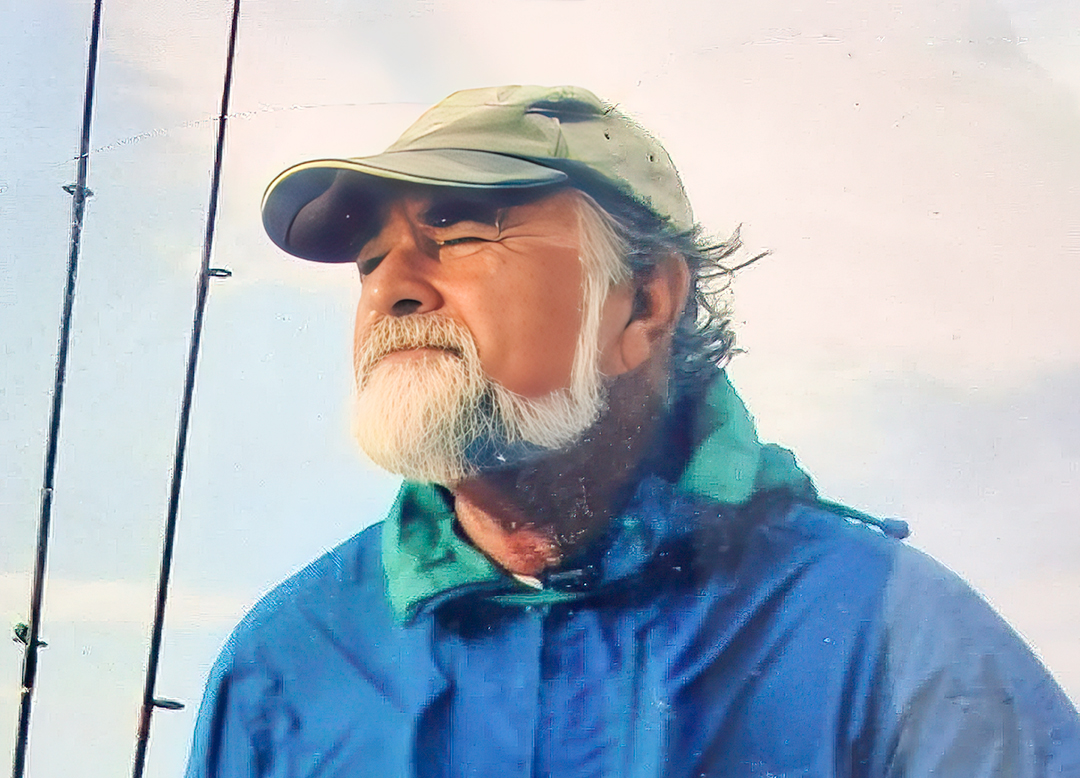
On Thursday, March 5, we lost one of the area’s earliest and most ardent defenders of the marine resources that make our Island home so special. 

I first met Captain James “Zach” Zacharias when I began my career writing about fishing in a column called “Backlash” for the Longboat Observer in the 1980s. Captain Zach was a reliable source for my Captain’s Report and he was someone who shared my passion for fishing and protecting the local fishery. That passion led both of us into the ongoing fight to protect water quality and the habitat that safeguards that resource. Everyone who enjoys a day on the water owes Captain Zach a debt of gratitude for his service that inspired me and many other local environmentalists.

I asked several of his friends to share their memories of Captain Zach – testimonials that speak to the remarkable nature of a humble man who loved fishing and the marine environment and worked tirelessly to protect it.

Captain Justin Moore: Zach was one of the humblest fishing guides you’ll ever meet. I remember vividly one time he took me fishing and let me drive his boat from Cortez to Longbar when I was 10 years old. We caught fish for hours. Zach was a kind soul with a gentle voice. He was always willing to have breakfast and coffee and talk about the good old days of fishing.”

Captain Scott Moore: Zach was a special guy. He was a very good captain, good with people and he fished hard. He loved to catch a variety of fish and was a very good cook as well. I spent many hours talking to him about my ancestry in Cape Cod. If I had questions, he could answer them about my family’s hometown. He’s going to be missed. He represented the guiding and fishing community, working hard to protect what we all love about this area.

Merrie Lynn Parker: Captain Zach sat on Manatee County’s first Environmental Land Management and Acquisition Committee (ELMAC) with my husband, Chick Parker, and he was an active member of Manatee Fish & Game Association. Zach was a fantastic fisherman, but more importantly, a strong and passionate advocate for our area’s natural resources, specifically wildlife habitat. He was a true man of the sea and understood the interdependence and fragility of the ecological coastal and upland world we are blessed with in Manatee County. Zach worked diligently on both the Emerson Preserve and the Duette Preserve management plans. Zach was a man of stature and humility.

Angela Collins: Captain Zach was an active member of the Sea Grant advisory committee under John Stevely and me. Zach provided a lot of honest guidance on issues that were important to fisheries. He was also a supporter of the Florida Institute of Saltwater Heritage (FISH) and was a reliable member of both organizations.

Captain Scott Greer: Manatee County lost one of its finest. Captain Zach was an excellent guide and put a smile on thousands of customers’ faces over the last 50 years. He was also very involved in conservation and water quality issues. That was back years ago, before most people realized how important water quality was and it wasn’t a very popular issue. We all owe him many thanks for some of the work he was involved in. 

Captain Jonnie Walker: Captain Zach was one of the area’s finest guides. I first met him in the early 80s through Judge Lynn Silvertooth and always admired his dedication to the environment. He was always the nicest and most positive guy. He was never in competition with the other guides; he was just one of us. I particularly liked working with him when he took over the fishing report for the Sarasota Herald-Tribune after Steve Gibson’s passing.” 

On a more personal level, Zach and I had coffee in the morning at the Cortez Café for several decades and had many lively conversations and shared many laughs. He will truly be missed as a fellow guide and as a true friend. 

Captain Zach’s legacy can be honored by all who love the Suncoast by continuing his work to protect the waters that benefit us today and all future fishermen. There will be a celebration of life for Captain Zach in the spring.

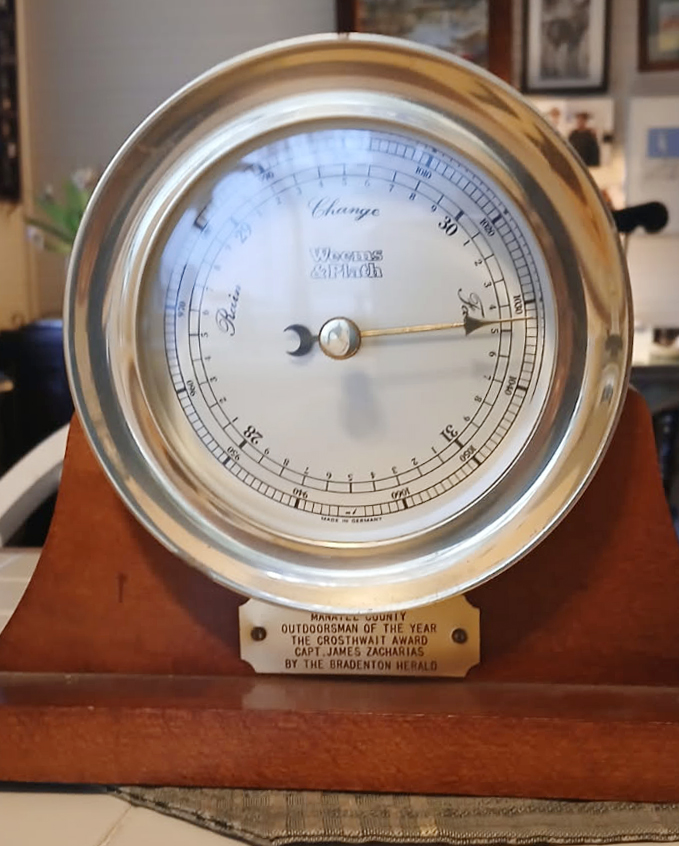
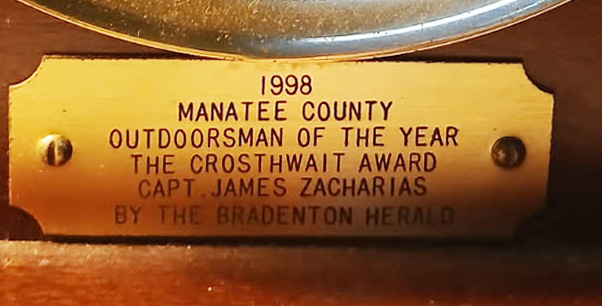
James “Zach” Zacharias was Manatee County’s Outdoorsman of the Year in 1998. – Submitted
James “Zach” Zacharias won the Manatee County Outdoorsman of the Year award. – Submitted
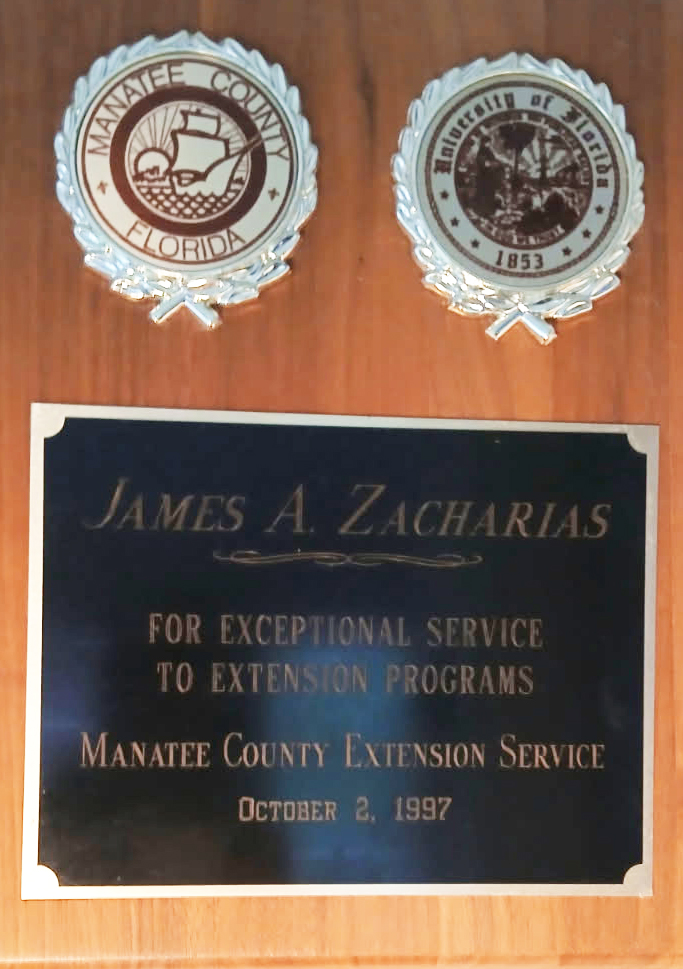
James “Zach” Zacharias was recognized for his exceptional service in 1997. – Submitted

Reel Time on The Road: Fishing the Chass

Locally, we’re blessed with an amazing fishery and a natural world that supports it. As good as the fishing can be close by, every angler has an urge to experience someplace that’s unique, less crowded and rich in wildlife and fish. 

If you’re thinking Cuba, the Bahamas, Belize or Argentina, you’d be right. You might also be surprised that such a destination exists less than two hours to our north. Aptly branded the “Nature Coast” by the chamber of commerce, this region is noted for its springs, rivers, wildlife preserves and manatees. Anchored in the south by the Chassahowitzka National Wildlife Refuge, and to the north by Waccasassa Bay, the coast harbors the popular tourist destinations of Homosassa and Crystal River, but also miles of wild coastal habitat teaming with redfish, trout, snook and tarpon (seasonally).

At the beginning of March, Captain Rick Grassett and I joined our friend, Captain Bryon Chamberlin, for two days of exploring the extreme backwaters of Chassahowitzka Bay. 

By extreme, I mean the kind of water I would never attempt to reach in my boat (if I could) and an area where you can fish all day and never see another boat nearby. That’s made possible with Chamberlin’s 17.5-foot Sabine – an all-aluminum flats boat that’s powered by a Gator Tail 40 HP outboard motor, giving him access to waters only inches deep. That’s a tall order in an area studded with limestone reefs, rock hard bottom and oyster beds.

When I inquired about a trip in the early winter, Chamberlin suggested a couple of days at the first of March when he targets large snook. His strategy is to mine the deep basins and pools that dot the refuge and provide sanctuary to fish on the low winter tides. While the fishing is definitely the focus of the trip, I always find myself exclaiming that the ride alone is worth the “price of admission!” 

Chamberlin has been fishing the area for several decades and he’s also an avid photographer and naturalist, as well as an accomplished guide. The day’s main targets were reds, trout and snook, but pursuing them was blended with scenic rides through the rich habitat replete with bald eagles, hawks, river otters and manatees.

We departed each of our two morning trips from the Chassahowitzka River Campground, where Chamberlin launches his boat. The campground and ramp are located on the banks of the Chassahowitzka River that’s formed from numerous springs, giving access to the larger preserve. 

We started the first day early enough to take advantage of the light for photographing the scenic river and its inhabitants, encountering eagles, kingfishers, herons and otter along the way. When the light was up, we motored into the far reaches of the preserve where only fools and knowledgeable guides fear to tread. We found the action a bit slow for the redfish and trout we expected, but the snook fishing, while not red hot, yielded the largest snook on the fly for both of us. Before noon, I hooked and landed a 34-inch snook and Grassett landed one a bit over 33 inches.

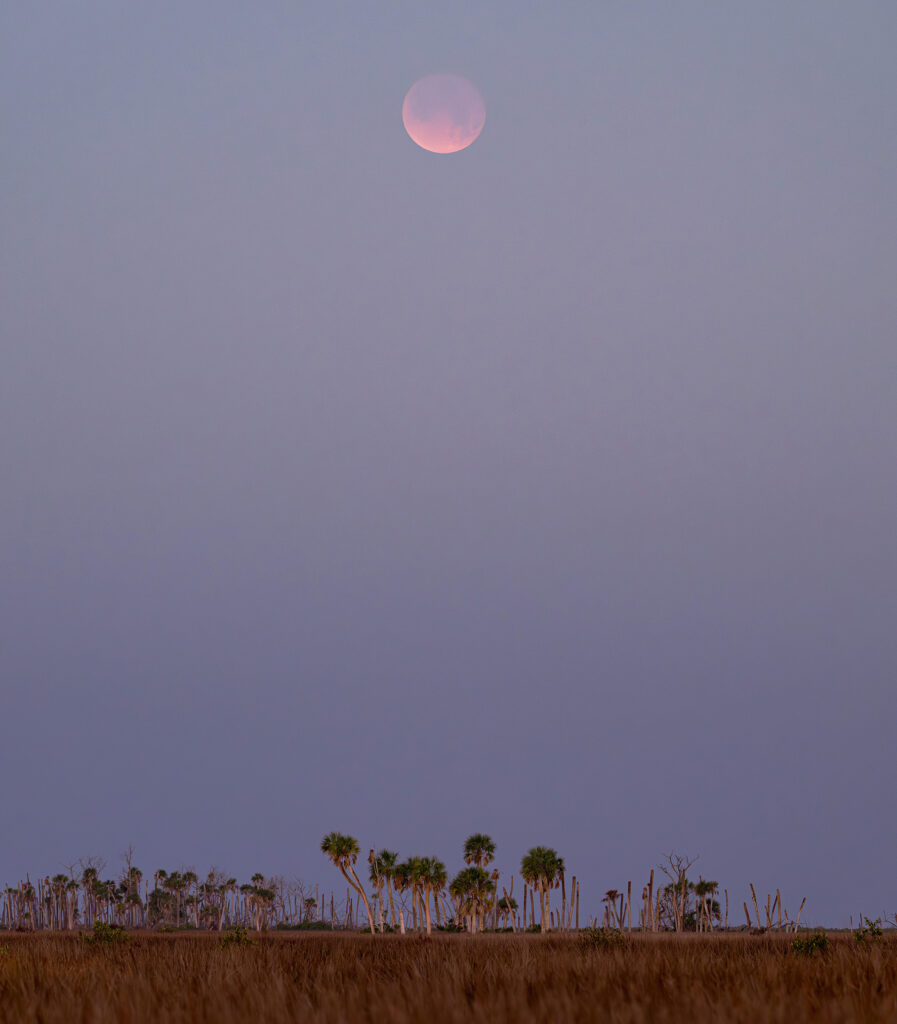
Our second day started at 5:30 a.m. so we could photograph the lunar eclipse and “blood moon” deep in the refuge at dawn. Chamberlin had scouted out a location where he could frame the setting moon with a faraway palm hammock. The ride in darkness down the sinuous river was only illuminated occasionally when the setting moon was eerily reflected on the water’s surface as our guide’s spotlight scanned the shoreline. After a 20-minute ride that would have been harrowing if not for our confidence in our guide, we landed at the chosen spot and set up tripods.

Byron Chamberlin photographed the “blood moon” and the lunar eclipse from a boat on the Chassahowitzka River, a couple hours north of Anna Maria Island. – Byron Chamberlin | Submitted

The experience was unique and picturesque in the predawn light; and after our photo session, we were treated to a ride through the twisting waterways that weave and embroider this “untouched” natural wonderland. While we waited for the tide to drop, we reveled in the photographic opportunities the area provided as we sought out the eagles, wading birds and other raptors that make this area home.

The fishing proved both challenging and productive as redfish and trout were again elusive. Chamberlin knows the area well and his local knowledge allowed him to bounce from spot to spot where we all managed to catch nice snook, a few trout, ladyfish and one redfish. True to form, our trip back to the ramp that afternoon was an exciting journey through twisting channels, sharp bends and narrow passages.

I highly recommend a trip (or trips) to this productive and breathtaking part of Florida that’s only a short trip to our north. The opportunities abound from Chassahowitzka to Cedar Key. A quick look at a map will confirm my recommendation!

Rusty Chinnis shared this video of their Chassahowitzka explorations.

On the Cusp: legislative action needed

While we’re still on the cusp of some of the year’s most exciting fishing, let me encourage you to express your opinion to your local state representative, Will Robinson Jr., on a very important issue that is addressed in Suncoast Waterkeeper’s February newsletter: adopting new legislation that fixes the state law created in 2025 by the Florida Legislature and Gov. Ron DeSantis’ adoption of Senate Bill 180 . 

The Suncoast Waterkeeper newsletter says, “For those familiar with the Save Our Wetlands campaign in Manatee County, Senate Bill 180 will carry heavy connotations. Last year, SB 180 is exactly what prevented Manatee County Commissioners from reverting wetlands buffer protections back to their previous state.

“Senate Bill 180, Section 2(b) states: ‘For one year after a hurricane makes landfall, an impacted local government may not propose or adopt: A more restrictive or burdensome amendment to its comprehensive plan or land development regulations.’ This language prevents counties (and cities) from taking action to protect wetlands and wetland buffers, among other things, which are crucial in maintaining coastal resiliency,” the newsletter says.

“Suncoast Waterkeeper has been sharing an action alert from 1000 Friends of Florida which aims to find a fix for last session’s SB 180. As of now, Senate Bill 840 offers the chance to restore limited, but essential local planning authority. But Senate Bill 840 cannot be passed without a companion in the House. Enter House Bill 217. 1000 Friends of Florida suggests this would be the best option to put on the agenda and amend language to match SB 840,” the Suncoast Waterkeeper newsletter says. 

“To be clear, this is the only pathway to restoring Manatee County wetland buffer protections any time soon. Many representatives haven’t prioritized fixing SB 180 because they don’t see or experience the damage it has done to local planning efforts to safeguard our communities against increasingly extreme weather conditions. Write to the chair and members of the Intergovernmental Affairs Subcommittee and share how SB 180 has impacted our life here on the Suncoast, respectfully request that they put HB 217 on the agenda and amend it to match SB 840,” the newsletter says.

“A special shout-out and appreciation to Manatee County Commissioner George Kruse for his unwavering leadership on this issue. If we want the House to act, they must hear from you!” the newsletter says in closing.

State Rep. Berny Jacques chairs the House Intergovernmental Affairs Subcommittee. The phone number for his Tallahassee office is 850-717-5059 and his email address is berny.jacques@flhouse.gov. The phone number for Will Robinson’s Tallahassee office is 850-717-5071 and the number for his Bradenton office is 941-242-8430. Robinson’s email address is will.robinson@flhouse.gov.

There are so many important issues now, including the proposed cruise ship port and preserving the home rule rights that would allow reversing the county’s wetland setback reductions. It’s never been more important to stay informed and act to protect the waters we call home. Let’s make sure our actions today ensure an exciting fishing future for generations to come.

The Waterman 2026: Fishing for a purpose

The annual Waterman Fly Fishing Tournament was held Friday and Saturday, Feb. 20 and 21. The two-day, fly-only Redfish tournament with a Snook Calcutta was a sellout, with a total of 150 anglers and 77 teams.

The fishing boundaries were wide-ranging and included the west coast of Florida, from Crystal River to the southernmost tip of Sanibel Island. The photo submission format and the use of the iAngler Tournament phone app made it possible for fishermen in this entire range to participate.

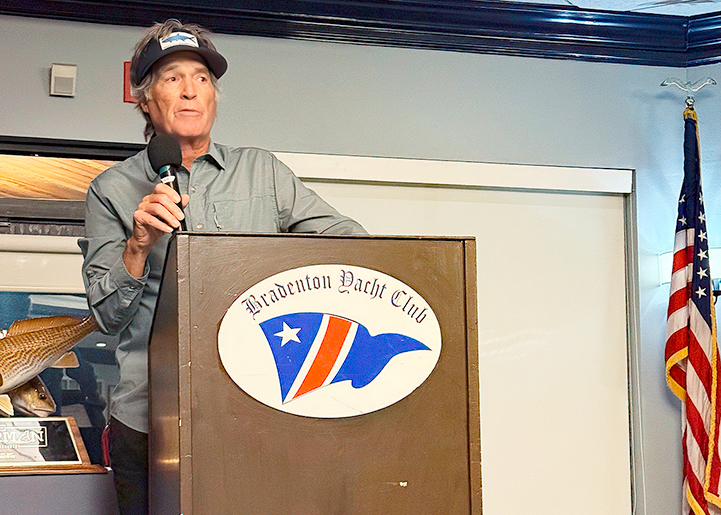
The tournament culminated in an awards banquet and raffle at the Bradenton Yacht Club on Saturday evening with special guest Andy Mill – tarpon angling phenom and co-host of the popular Mill House Podcast with his son, Nicky.

Mill participated in a question-and-answer session with tournament founder and Tampa Bay Waterkeeper (TBWK) Chairman Adam Fernandez and members of the audience. 

This year’s tournament took on special significance with the looming threat of the proposed Knott-Cowen Cruise Port, which has been covered in this space and will remain a focus going forward. 

The 150 anglers, fishing mostly in teams of two, received a tournament shirt, a Tampa Bay Waterkeeper cap, dinner for two at the awards ceremony and one raffle ticket for each angler. Target species were redfish and snook. Scoring was done by the highest combination of the two longest redfish caught between day one and day two.

Fernandez, in his introduction at the evening’s awards ceremony and raffle, went out of his way to thank TBWK Executive Director Justin Tramble for his efforts. Tramble “has taken my idea for a tournament to the next level,” he said. 

Tramble was up next and he credited his wife Rebeka, the volunteers and the many anglers who have made his efforts, and those of the organization, bear fruit. 

According to Tramble, “This annual gathering of fly-fishing anglers – some of the best in the state – drives our organization’s fight to protect our local marine habitat. It’s an exciting opportunity to shine a light on Tampa Bay and our surrounding waters. As the continued fight against the Skyway cruise port takes shape, events like the Waterman fuels our ability to stay in the fight.” 

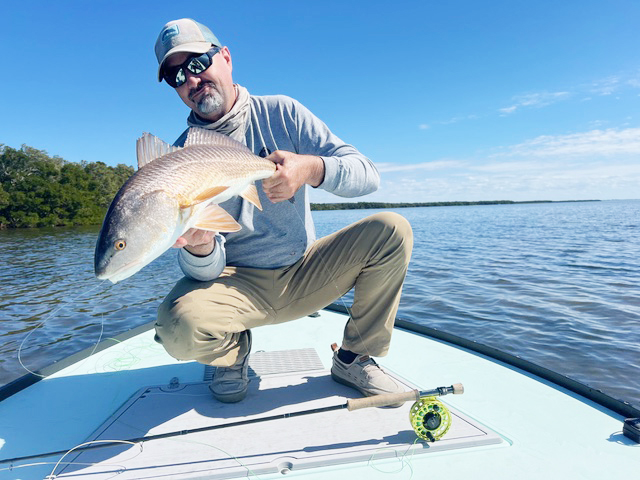
The winner of the Snook Calcutta was Greg Dini with a 40-inch linesider. The largest redfish was landed by Kyle Nalls and measured 36.75 Inches.

OVERALL TEAM WINNERS

Team TBS Beverage, consisting of anglers Sean Kersting and Trip Saunders, captured first place with a combined length (two redfish) of 67.5 inches. 

Team Darkhorse, consisting of anglers Vince Azoy and Kyle Nalls, won second place with a combined length of 62 inches. 

The third-place winner was Team Triple B anglers Christopher Dierlam and Greg Peterson, with a combined length of 61.75 inches. 

Special thanks are in order for everyone who participates in and supports the tournament and those who are working tirelessly to protect the waters and habitat of the Tampa Bay region. 

To join in the protection of local water visit the Tampa Bay Waterkeeper and Suncoast Waterkeeper websites. 

Scallopalooza 2026: “Taking Action to Preserve Our Bay”

On Saturday night, March 7, Sarasota Bay Watch will hold its 16th annual major fundraising event, Scallopalooza. This year’s theme is “Taking Action to Preserve Our Bay.”

Scallopalooza is an annual fundraising gala that directly supports Sarasota Bay Watch’s mission to protect and restore Sarasota Bay through habitat restoration, water quality improvement, marine debris removal and environmental education programs.

Scallopalooza 2026 will be held at the Sarasota Municipal Auditorium and the doors open at 5:30 p.m.

Held annually in Sarasota, each year’s Scallopalooza brings together supporters, community members and conservation advocates for an evening of fundraising and celebration.

Individual tickets are $150 and the price decreases for tickets purchased for groups of six, eight or 10. Tickets can be purchased at www.sarasotabaywatch.org.

Your Scallopalooza ticket gives you access to the full gala experience, including an open bar, craft cocktails, great food, silent auction, raffles and the opportunity to support Sarasota Bay Watch’s conservation initiatives.

The event is a coastal casual gala-style event. Guests are encouraged to wear relaxed yet stylish attire suitable for an evening by the bay. Coastal casual may include sundresses, linen shirts, lightweight button-downs, polos, dressy sandals or loafers. Comfortable, breathable fabrics and beach-inspired colors are perfect for this fundraising event.

Besides individual participation, Scallopalooza offers multiple sponsorship opportunity tiers for businesses and organizations that want to support Sarasota Bay Watch while gaining visibility in the community. Sponsorship packages include event recognition, marketing exposure and additional benefits.

All guests can participate in the silent auction and raffles during the event. These fundraising activities help generate additional support for Sarasota Bay Watch’s conservation programs.

If you would like to get involved with the work Sarasota Bay Watch is doing to protect Sarasota Bay, and support their mission, visit the Sarasota Bay Watch website.

Make sure you take note of the organizations that are major sponsors of this important fundraising effort. As their motto says, “A healthy bay is everybody’s business,” literally and figuratively! I hope to see you there.

Reel Time: Think like a fish

Fishermen are forever trying to divine the secrets of fish behavior in an attempt to fool them into taking our submissions of fur and feather, lures in a kaleidoscope of shapes and colors or live offerings of their favorite prey. 

Conversations on anglers’ boats revolve around declarations like: “They should be coming into those pot holes as the tide rises,” “This cold weather will have them warming up over dark bottom,” “The action will slow down as the tide slacks” and “All we have to do is stay on this edge until an hour into the falling tide and they will pour out of the bay.”

The more time you spend on the water mindfully observing the interplay of tides, wind, weather and fish behavior, the better your chances of success. It’s the best chance we have of divining this intricate interplay of causes and conditions in an attempt to “think like a fish.”

Some anglers catalogue their experiences in their head, while others keep logs to document fish activity and others just go to spots where they’ve found fish before. 

Fishing guides, whose profession centers around putting their anglers on fish, develop some of the clearest insight into the behavior of fish. They have the advantage of watching fish behavior from day to day. 

While more “mindful” time on the water will improve your odds at success, the truth is that when you think you’ve hacked the secret you’ll discover it’s more complicated than you know, and really more complicated than you can know. That’s what keeps it interesting and that’s why there are so many lures, flies, lines, rods, reels and “experts” out there. 

Some “truths” about fishing I’ve observed over a few decades come from friends, experience and even songs. Captain Rick Grassett coined a phrase that’s obvious but prescient: “You don’t know until you go.” Experience has shown me that you should give any spot that your intuition draws you to some time. You definitely won’t catch fish if you’re running constantly; your line needs to be in the water. 

Songwriter and singer Bill Withers’ lyric, “Good things come to those who wait, but not to those who wait too late,” also resonates. We need to give any spot a chance, but we also need to realize when it’s time to relocate. 

That’s what we love about fishing. Experience definitely improves your odds, but we’ll never actually “hack” the solution to finding hungry fish that are willing to accommodate our passion. 

Still, never give up trying to “think like a fish.”

The Cruise Port: A Cautionary Tale

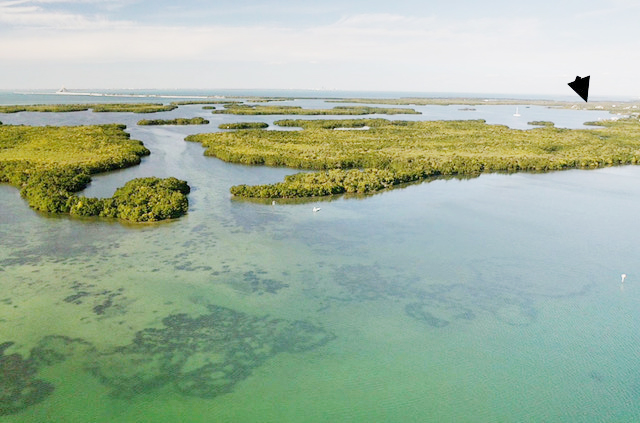
By now, most of you are probably aware of the proposed cruise port that would be adjacent to Rattlesnake Key and the Terra Ceia Aquatic Preserve.

This port, as it is envisioned, would handle the new class of cruise ships that are not able to sail under the Skyway Bridge. With a clearance of between 175 and 190 feet, depending on the tide, passing under this bridge is awe-inspiring. The thought that ships like Royal Caribbean’s Icon of the Seas, at almost 250 feet tall, would be diverted to rest at port just north of this vital preserve boggles the imagination. 

I’ve fished these waters for almost four decades and regularly take friends and guests there to show them what I consider the best of Manatee County’s many unique natural resources.

Rattlesnake Key was recently purchased by SSA Marine, through a subsidiary called the Rattlesnake Key Preservation Company, ostensibly “to preserve the island’s natural character and keep it in long term conservation for public enjoyment,” according to a company statement. In my opinion, it appears the real reason was to help justify the destruction that will be required to build the port they are proposing.

How we got here in the first place strikes me as very suspicious. Had Rattlesnake Key been protected prior to this proposal, all this would have become a moot point. 

In 2022, in partnership with State Rep. Will Robinson Jr., Senator Jim Boyd secured $23 million in state funding with the goal of purchasing Rattlesnake Key. The sale then failed due to a low appraisal by the state. 

As Boyd notes in a recent opinion piece, “Buying the property would have forever prevented development, ensuring its protection for generations to come.”

In 2024, they tried again with state funding and a commitment from Manatee County. This failed again due to the disparity between a low state appraisal and the asking price of the 700-acre property. 

The state’s recent purchase of four acres in Destin for $38 million, and a state appraisal that justified it, raise serious questions in my mind about how we value land in Florida and the politics that can influence these decisions. 

The state values land partly due to its development potential, which in this case shows how that system is flawed. Originally purchased for approximately $8 million in 2016-2017, there have been questions raised about the prior owner’s political donations. 

The opposition to the port proposal has been broad and swift, but I worry that deep pockets and political influence might affect the final decision. 

Manatee County’s future depends on the natural resources that define and draw visitors and residents to our county. The long-term health of our natural resources and their connection to our economy cannot be overstated. 

People travel to and settle in this area because of the natural coastal beauty of the  places we’ve preserved – like Neal Preserve, Perico Preserve, Robinson Preserve and Emerson Point. 

In my opinion, the development of a cruise port near Rattlesnake Key and the Terra Ceia Aquatic Preserve would be a travesty that would degrade this rare coastal habitat and be a long-term negative for our economy. 

It’s important that we stay on top of this unfolding story. Attend meetings to express your opinion, write letters to decision makers, sign petitions and join and support organizations like Tampa Bay Waterkeepers and Suncoast Waterkeeper who will be leading the fight against this misguided proposal.

Reel Time: The Price of Inattention

I first wrote an article with a similar title more than four and a half years ago, but I thought it was appropriate to revisit that topic given the constant challenges facing anglers and the waters that we fish.

Those anglers who have fished the waters of Sarasota and Tampa Bay (and all the connected bays) for decades have seen firsthand the decrease in water quality, loss of habitat and the resultant degrading of local fisheries. 

Don’t get me wrong, we still have some excellent fishing and the habitat that has been referred to as “fragile” turns out to be extremely resilient. That’s the good news, but only if anglers stay engaged in protecting “the goose that laid the golden egg.” 

The problem lies in the perception of anglers and residents who recently relocated here, and this is nothing new. When we’re new to an area (now or four decades ago), we experience what is referred to as “the new normal,” or the “shifting baseline” – a phenomenon in which each generation accepts a degraded or altered condition as “normal” because they compare it only to what they have personally experienced, and not to historical conditions.

This became clear to me only recently, when I read Jack Davis’ Pulitzer Prize-winning book “The Gulf: The Making of an American Sea,” a book described as a work that powerfully illustrates shifting baselines – how each generation accepts a diminished Gulf as “normal.” 

I vividly remember accounts (paraphrased) by early settlers of flocks of birds so abundant they would darken the midday sky, and mullet so thick you could almost walk across the bay on their backs.

This is not intended to make anglers nostalgic for what has been lost, but to realize we can enjoy our angling adventures even more by working to protect and improve what we love, so future generations of anglers can have some of the opportunities we enjoy. 

Reel Time is, and I intend it to continue to be, a way to share the adventures of angling, help introduce new tackle and techniques, explore destinations and introduce children and new residents to this amazing resource that surrounds us. A vital part of that mission also needs to explore the challenges that face us and share ways to protect it.

Reel Time: Why Mullet Jump

Reel Time: Why Mullet Jump

While I was sitting by the bay the other day a mullet jumped right in front of me. That’s not unusual if you spend anytime near the water, and it elicited memories of stories I’ve heard over the years that sparked my curiosity. 

The first explanation I remember was from the longtime outdoors editor of the Bradenton Herald, Jerry Hill (from the late 1970s until his passing in 2009). A man with a vibrant sense of humor, Hill explained how mullet were vegetarians and eating all those veggies caused them to be flatulent. Releasing that gas was what propelled them out of the water.

Humor aside, I decided to do a search and came up with probable causes: it helps them supplement their oxygen (the theory being they spend a lot of time in warm, cloudy, oxygen-poor water); jumping helps them shed parasites, avoid predators and maybe even helps them see where they were going! 

Since I was seeing them jump in clear, cold water I discounted the supplementing O2 theory. I reached out to some commercial fishermen and anglers that I know and respect to get their takes. A highly respected guide who is by nature very observant (he also commercially cast netted) told me he thought it served the purpose of helping them digest their food, since mullet are one of the only fish with a gizzard. Additionally, he suggested it helped them communicate, as he has observed that males and female jumped at different times, especially when they were in spawning populations.

When I called a Cortezian friend who grew up in the village and asked him, he responded, “You want me to ask a Cortezian why mullet jump?” We had a good laugh over that and hung up. The next day he called to say he had reached out to the oldest and most knowledgeable commercial fisherman in Cortez and got a response. The explanation he offered was that after a lifetime of observing and pursuing them, he believed they jumped to communicate. 

Amazingly, I got this call while I was sitting by the bay – and as if the mullet were privy to this conversation, a number of them started to jump right in front of me. 

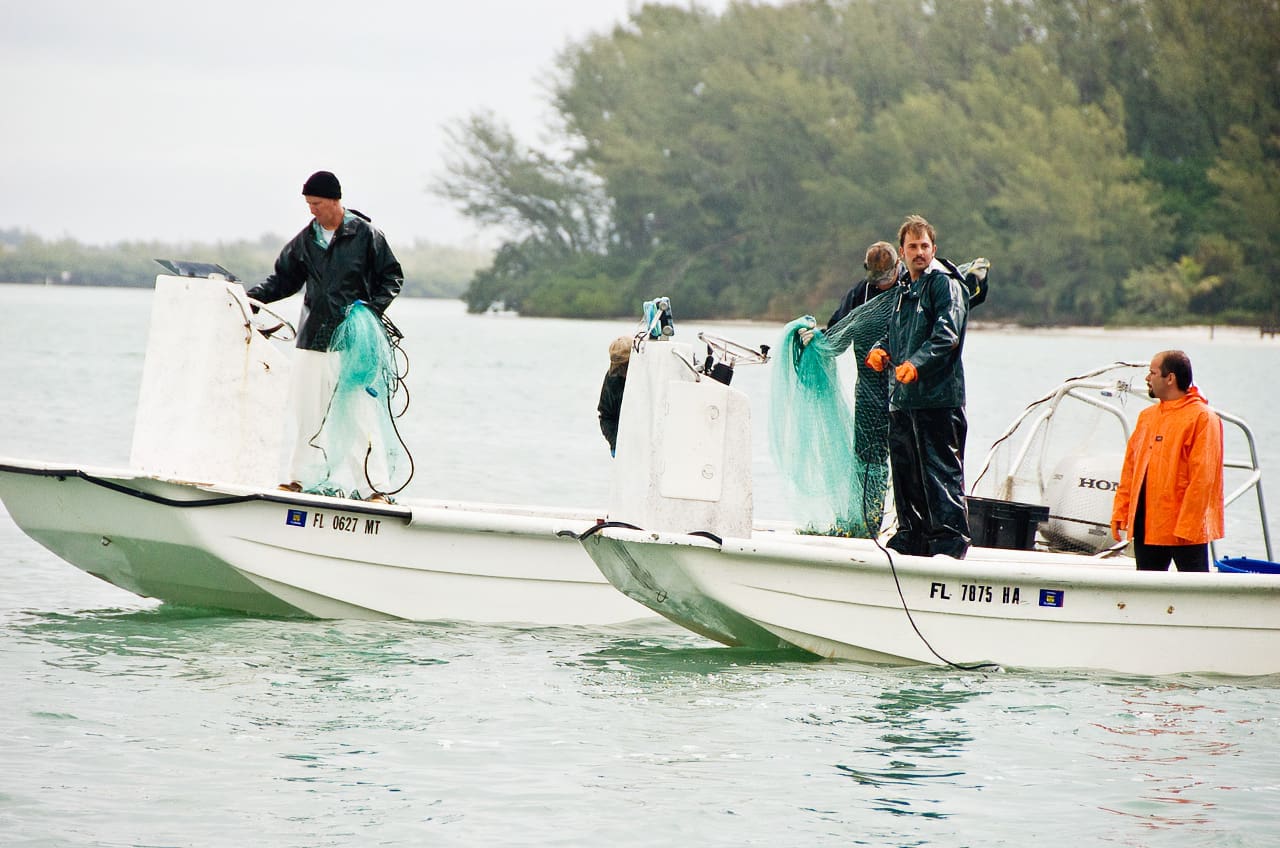
When I looked up, I saw a boat with two commercial cast netters approaching about two hundred yards in the distance. As the boat came closer the mullet stopped jumping, as if they had alerted the school and were hiding as the boat closed in. A coincidence? Maybe. But I’m guessing that if we want to know for sure we’ll have to ask a mullet!

Do you have a theory? Have you spoken to a mullet recently? Feel free to share a comment at this week’s Reel Time column posted on the Anna Maria Island Sun Facebook page.

Reel Time: A New Winter Strategy

Reel Time: A New Winter Strategy

Winter can have a chilling effect on local anglers and limit their quarry, but those who know how to mine the riches of any season turn their attention to the species that actually thrives in cold water.

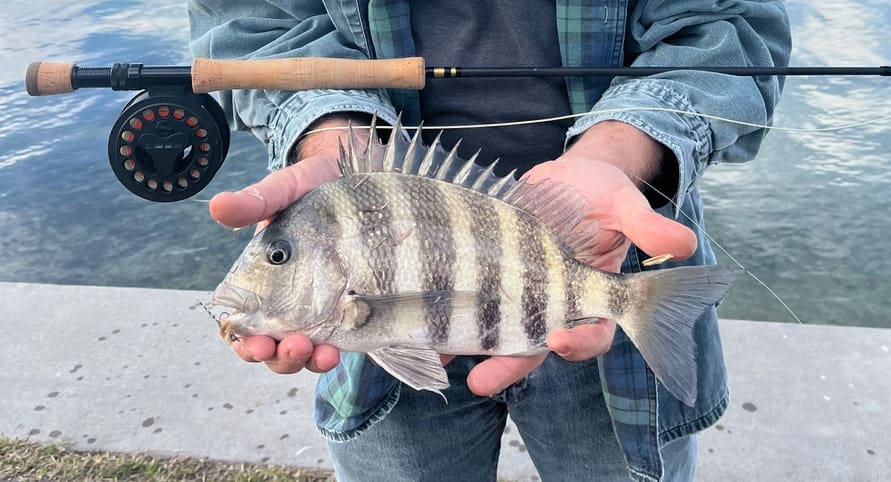
The best example locally are known for their bait stealing prowess and the stripes they dress in. Sheepshead, while shunned by some anglers, are hard fighting, challenging to hook and excellent to eat. Savvy anglers’ target sheepshead around structures like bridges, hard bottoms, oyster bars and dock pilings, where they feed on barnacles, crabs and other crustaceans. They know to use small, stout, sharp hooks; and for best success, they (tongue in cheek) advise to set the hook a split-second before they bite!

As a fly angler, I’ve caught a few sheepshead over the years, all accidentally while fishing for other species. The times I’ve seen them and actually made a presentation, they never seemed to respond to my efforts.

When Ryan Gandy, the new executive director of the Sarasota Bay Estuary Program, recently mentioned he targeted them with a tiny fly I was slightly skeptical and all ears. Last week, Gandy and his son, Kyle, joined me for a day on the water and a chance for him to show me his technique.

Reel Time: A New Winter Strategy
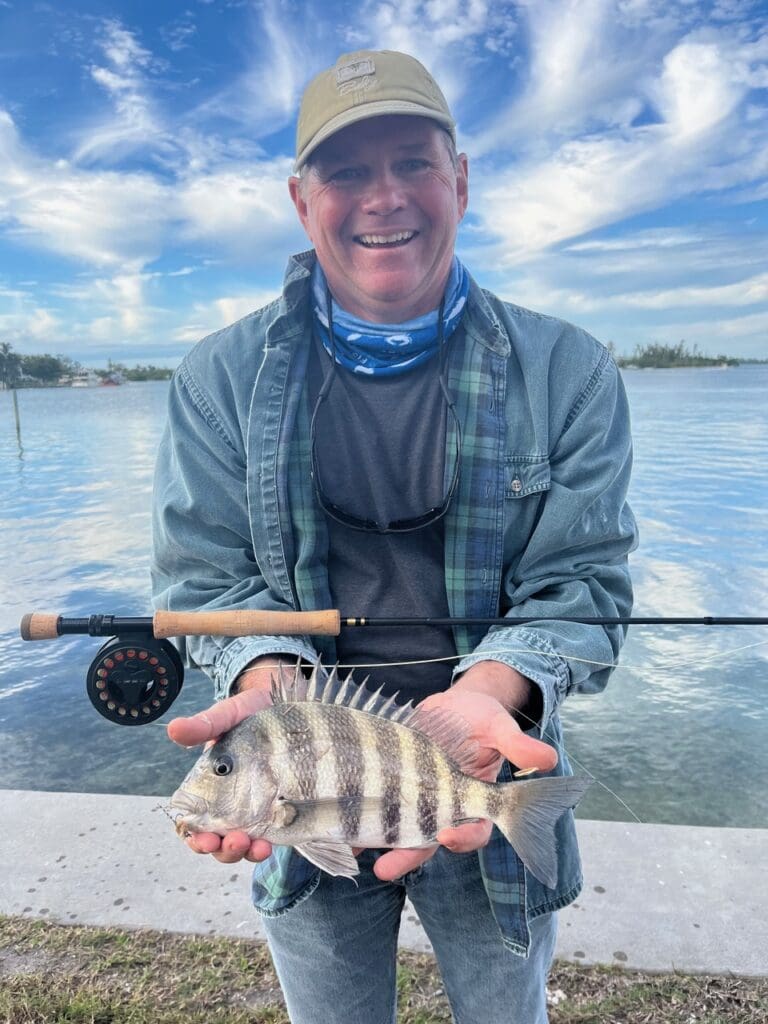
Ryan Gandy with proof that his fly fishing concept works. – Rusty Chinnis | Sun

We started the day fishing the edge of Long Bar Point in Sarasota Bay, but a south wind had roiled the water, making it off-color and hard to spot fish. The tide was low and incoming all day, so we moved north where the water along the eastern shoreline was clear. For the next four hours, we were plagued by scudding clouds that made spotting fish hard, but we still managed three redfish and a trout.

The sheepshead we did find were spooky, and most were not seen until we were so close Gandy had to make a roll cast presentation. While we did get a few follows, the sheepshead that seemed interested were spooked by the boat before making a commitment.

After fishing a number of spots, I mentioned that I had seen some sheepshead in shallow water just off a seawall near where I launched the boat, so we decided to try and make that a learning opportunity.

Luckily, the sheepshead were obliging; and after two casts, Gandy got a take and landed a sheepshead just as he had predicted. In the process, I was given a first-hand demonstration of his technique. Key to his strategy was making a cast close enough so the sheepshead could spot the fly, but not too close to avoid spooking them. He mentioned what good eyesight they had and how they could spot a fly at a distance.

He demonstrated this by casting about three feet past the intended target and then slow stripping it until the sheepshead spotted it. When the fly was spotted, it rushed over to inspect the perceived prey and that’s when the next critical move, or lack thereof, was employed. Stopping the fly and letting it sink to the bottom mimicked a crab trying to hide from a predator it knew it couldn’t outrun. When the sheepshead rushed over and tipped up on to the fly, Gandy moved it with a small strip. Doing this allowed him to determine if the fly had been taken; and if not, would mimic a crab that had been discovered and was attempting to flee. This happened twice, and on the third strip the sheepshead was hooked.

This was a perfect opportunity to see his strategy in practice; and it reminded me of how a fly angler teases a permit, which is one of the hardest fish to entice to a fly. It also made me aware that sheepshead are predators; and, like when fishing for permit, patience and persistence are key.

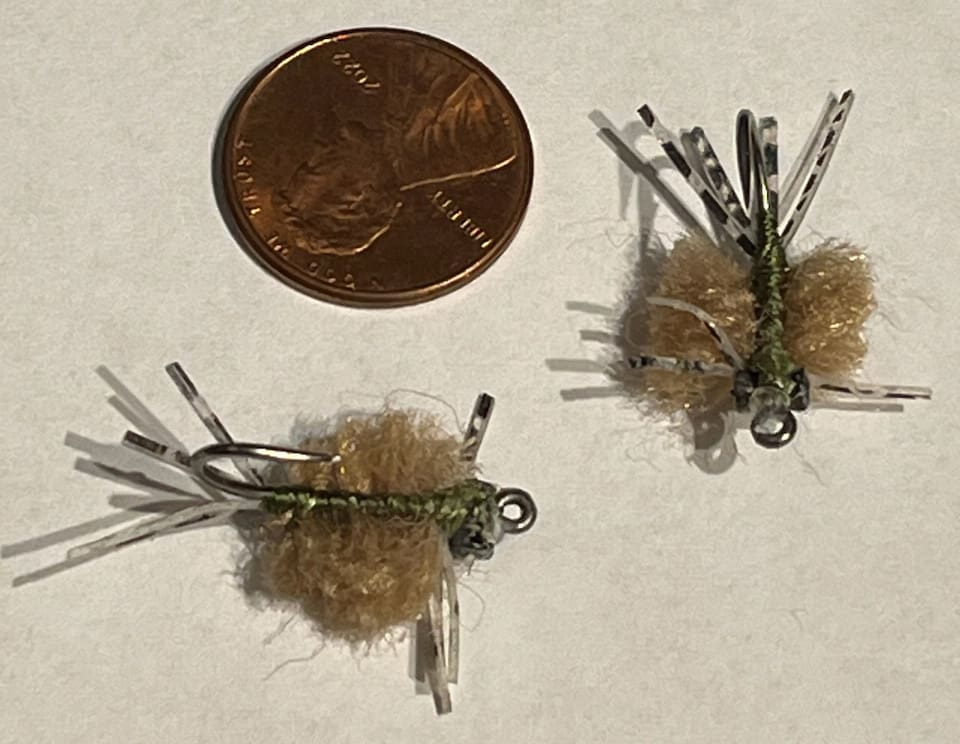
Gandy ties a small version of the Merkin (a time-tested permit fly) on a #4 hook. Other flies, like the Alphlexo crab, are also effective.

Reel Time: A New Winter Strategy
A penny gives perspective on the size of Gandy’s sheepshead merkin. – Rusty Chinnis | Sun

It great to get insight on a new angle on sight fishing after so many years of fly fishing. If you haven’t been targeting sheepshead with a fly, I encourage you to give this technique a shot. I saw it in action and can’t wait to give it a try. Use your senses, experiment, be persistent and you can experience a whole new challenge during our cooler winter months.

Resolutions that bear fruit

Resolutions that bear fruit

New Year’s resolutions are an annual ritual that goes back over 4,000 years. The earli­est known resolutions come from the ancient Babylonians. During their Akitu New Year festival (held in March), people made promises to the gods – such as returning borrowed tools, paying debts or settling disputes to earn divine favor for the coming year. Failure to keep these vows was believed to invite bad fortune.

In modern times, resolutions are a time to look back and reflect on what matters most, how we feel about our lives and what changes might improve our situ­ation. It’s also a time to consider what positive actions and fresh explorations might be planned for the new year.

Anglers can glean some valuable insight by reviewing their year in fishing, examining what they learned from their days on the water, what their experiences revealed and assess how this knowledge might lead to improved success and enjoyment in 2026.

While many resolutions are made and forgotten rather quickly (think losing weight or exercising more), a look back on the small things that yielded big results can make a significant difference in your enjoyment on the water in the new year.

Tackle and organization are promising places to review, including equipment like your boat and motor, waders, push pole and trolling motor. Experi­ence teaches it’s the little things that we overlook that come back to haunt us.

An example might be remem­bering to carefully tie knots, inspecting and testing them before fishing. The same applies to sharpening hooks, checking the drag and inspecting line for nicks and abrasions.

Another resolution you might consider is to expand your horizon – the proverbial “stepping outside the box.” That could mean exploring spots you’ve never fished locally, like the Manatee and Braden Rivers, or exploring a little further north and south. Some of my favorite destinations include Chassahow­itzka National Wildlife Refuge, Homosassa, Crystal River and Waccasassa Bay to the north and Charlotte Harbor and Pine Island Sound to our south.

An even more important resolution that is in every angler’s interest is getting involved in protecting and restoring the resource that sustains our passion and determines the fishing success of future generations. Fishermen have the most to lose by not working to protect and restore local waters and habitat.

This can be as simple as picking up trash on the water or keeping an eye out for and reporting illegal mangrove trimming. Most importantly it’s critical that we vet local, state and national politicians on how they voted on matters that affect the water we drink and swim in and the fish we pursue. If we vote the party line rather than on the issues that affect our fishing future we’re working against our own self-interest.

Take the time to write letters, attend commission meetings and join and support organizations like Suncoast Waterkeeper, Oyster River Ecology, Sara­sota Bay Watch, and VoteWater. These organizations work to protect and restore our marine ecosystem. A resolution to act this year will help protect what we value most for today’s and future generations. Failure to act will, as the Babylonians predicted, bring bad fortune.

Happy New Year!

Reel Time: Rebuilding oyster habitat

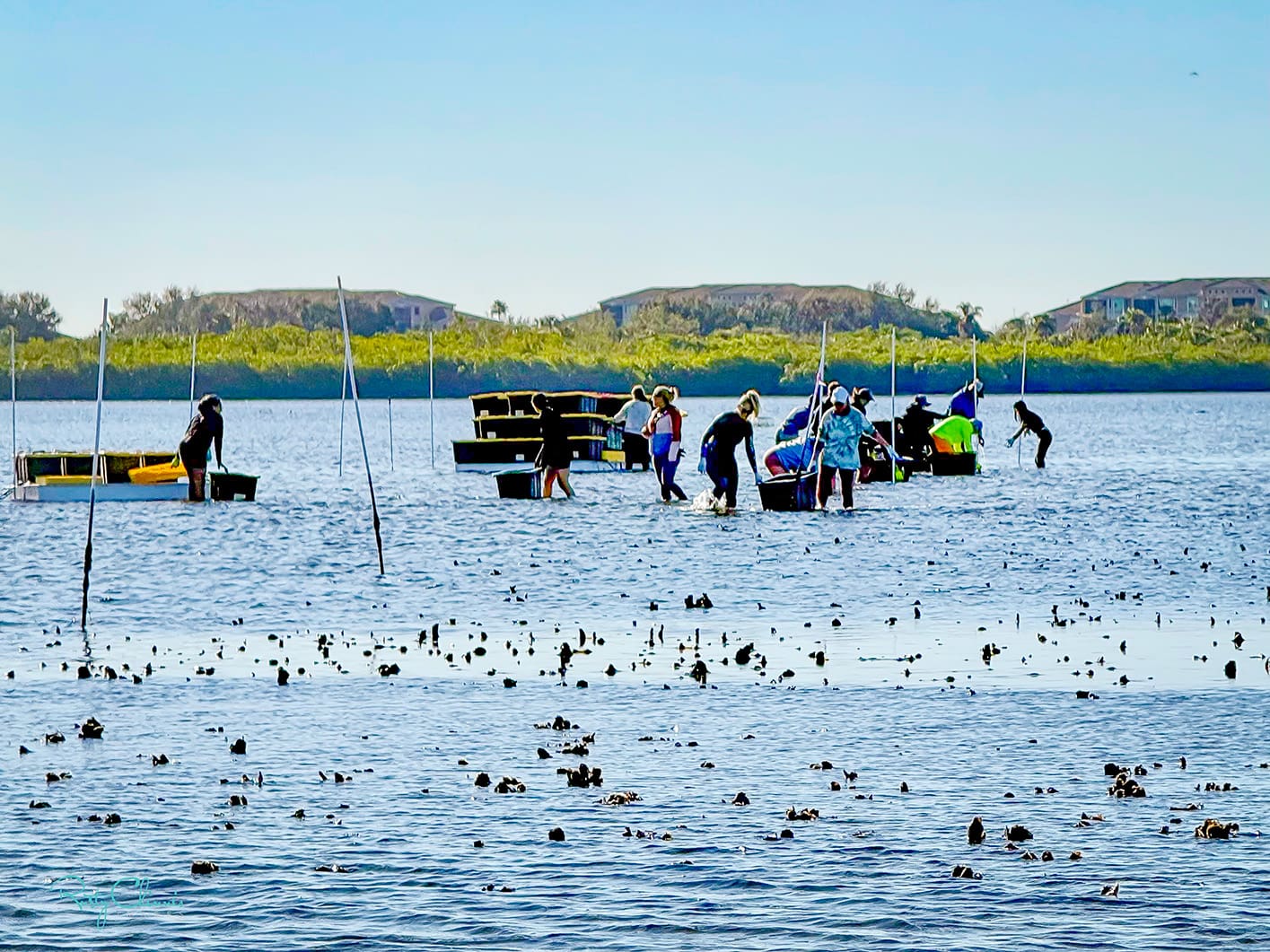
On Dec. 20, Oyster River Ecology (ORE) board member Rob Brown and I participated in an ORE rag pot installation in the upper Manatee River near Redfish Point. The volunteer event, a partnership with the Tampa Bay Estuary Program (TBEP), was a hands-on restoration work day that focused on rebuilding oyster habitat in the Manatee River.

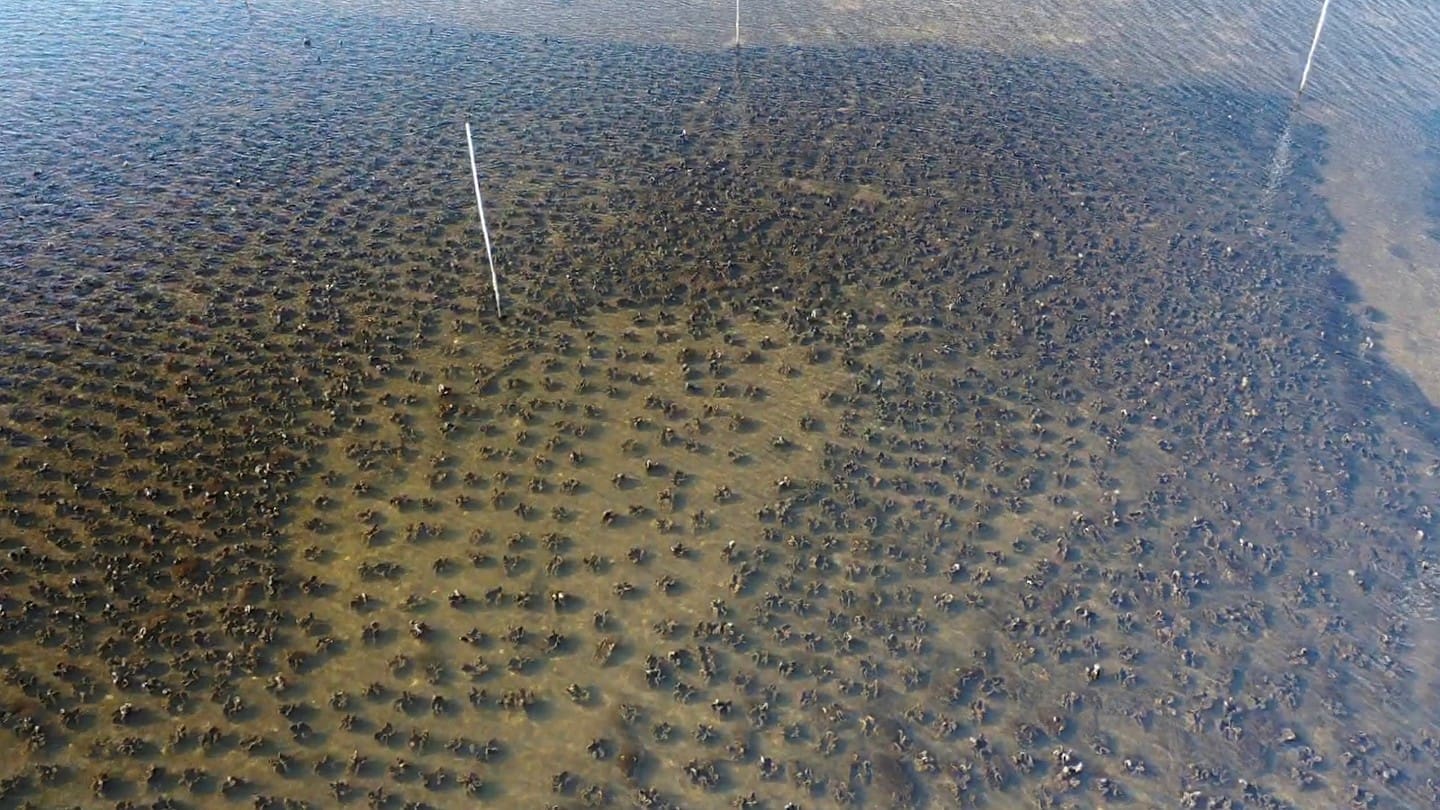
The event, scheduled from 8 a.m. to noon at the Eileen Reef near Parrish, brought together volunteers passionate about marine conservation and ecosystem recovery. In an hour and 15 minutes, the volunteers installed approximately 2,000 rag pots that mimic the complex habitats that oysters form naturally, helping to enhance local reef structure, improve water quality through filtration and support diverse aquatic life.

The rag pots were the brainstorm of ORE Founder and Executive Director Damon Moore and provide a cost-effective and ecologically friendly reef substrate that establishes new surfaces for oyster larvae to settle and grow. The oyster rag pots (ORPs) are made by dipping cotton rags in a cement mixture and shaping them into pot-like forms.

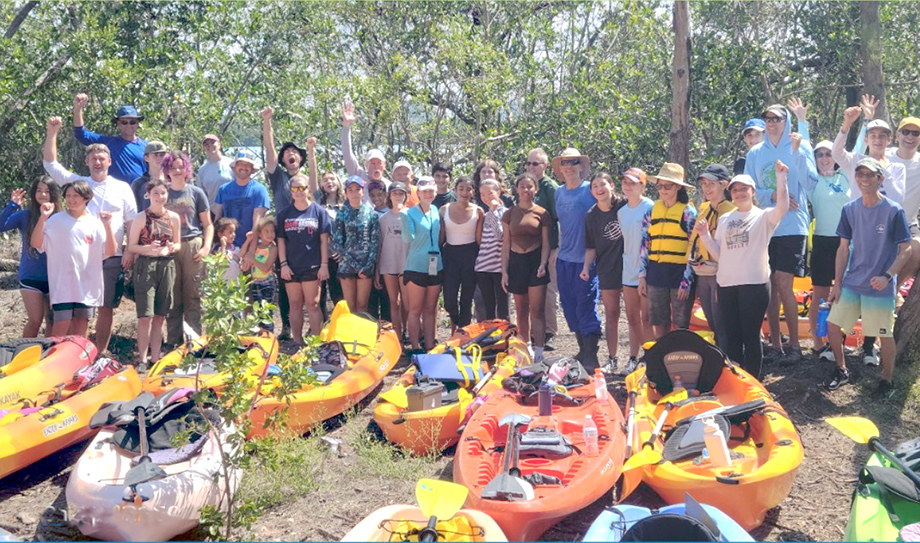
Volunteers launched kayaks along the river in Parrish and paddled approximately half a mile to the reef site. Once there, they received training and were divided into small teams led by ORE staff. Teams worked within pre-marked zones to install the ORPs at 1-foot intervals, a process that maximizes habitat coverage while minimizing disturbance to the river bottom.

The event was scheduled to coincide with an extremely low tide which ensured a water level (about 6–18 inches) that was more accessible and safer for volunteers to work in the tidal flats. Work included carrying materials, placing the rag pots and collecting tools and materials before paddling back to shore.

Besides restoration work, the installation day served as a community-building experience. Following the installation, volunteers gathered for a tailgate lunch provided by TBEP that offered volunteers a chance to celebrate their achievement, connect with fellow conservationists and learn more about ORE’s efforts to enhance the local marine environment.

Oyster River Ecology’s efforts are part of a broader movement to restore degraded oyster reefs, habitats that once flourished along Florida’s coasts but have been diminished by overharvesting, pollution and habitat loss. ORE’s mission is to engage volunteers in practical, science-based restoration techniques like rag pot installation. ORE not only helps rebuild vital marine ecosystems but also educates and empowers the community to take part in meaningful environmental stewardship.

To learn more about ORE’s mission, discover insight into local history (the Manatee River was originally named the Oyster River) and to be part of this game-changing movement, visit ORE’s website.

Reel Time: We protect what we love

Several years ago, I remember watching a tribute to the late John Lewis, the Black American politician and civil-rights leader. Lewis encouraged people to speak up and act when they see wrongs that need to be righted. While Lewis will be remembered for his bravery in the face of incredible hostility and hatred centered on human rights, his message, I believe, speaks to the threat facing local waters and the habitat that supports it.

Coastal habitats plays a pivotal role in the lives of everyone that resides and works on the Suncoast, from construction workers in Lakewood Ranch to the charter fishing guides that support their families and our passion as anglers. That’s why it’s so important that we protect these irreplaceable treasures so that future generations might have the same opportunities we’ve had.

You’ve read in this column about the pressures on our fisheries and the insults to water quality and habitat that underpin our passion and our economy. It’s critical that we support organizations like Suncoast Waterkeeper, Oyster River Ecology and Sarasota Bay Watch that are addressing these issues. Through outreach, education and advocacy these organizations defend communities against the threats to clean water and habitat. Suncoast Waterkeeper, founded by Sarasota environmental attorney Justin Bloom, has been effective in forcing municipalities from St. Petersburg to Sarasota to adhere to the laws set down in the landmark Clean Waters Act. The legislation, signed into law in 1972, establishes the basic structure for regulating discharges of pollutants into the waters of the U.S. and regulating quality standards for surface waters. Locally the law has allowed Suncoast Waterkeeper to force municipalities to address and redress the release of wastewater that has raised nutrient levels in local waters to dangerous levels.

Fortunately, it’s not too late to save these precious resources. Sarasota County, in a settlement with Suncoast Waterkeeper, just had a ribbon-cutting ceremony dedicating a $210 million dollar advanced wastewater system.

We all need to do our part by voting for proposals and leaders (both locally and federally) that support habitat protection and enhancement, as well as clean water. You can check a candidate’s voting record at the non-partisan League of Conservation Voters. For someone with no voting record, it’s enlightening to explore what interests are supporting their campaigns.
Join with Suncoast Waterkeeper to help with local clean water initiatives at www.suncoast waterkeeper.org. Learn about Sarasota Bay Watch and their work at www.sarasotabaywatch.org, and to learn about restoration at scale (17 acres of oysters), visit Oyster River Ecology. If we don’t step up, who will?

Reel Time: Double digits

Fly anglers generally don’t need to catch a lot of fish to consider a trip satisfying. Permit legend Del Brown said it best when I interviewed him in the Florida Keys. He told me never to let the number of fish you catch determine your enjoyment of the day. That was great advice, and while numbers aren’t so important, fly anglers do want to catch that “special” fish. For some fly anglers, it might be a tarpon over 100 pounds, a permit over 30 pounds or a bonefish over 10 pounds.

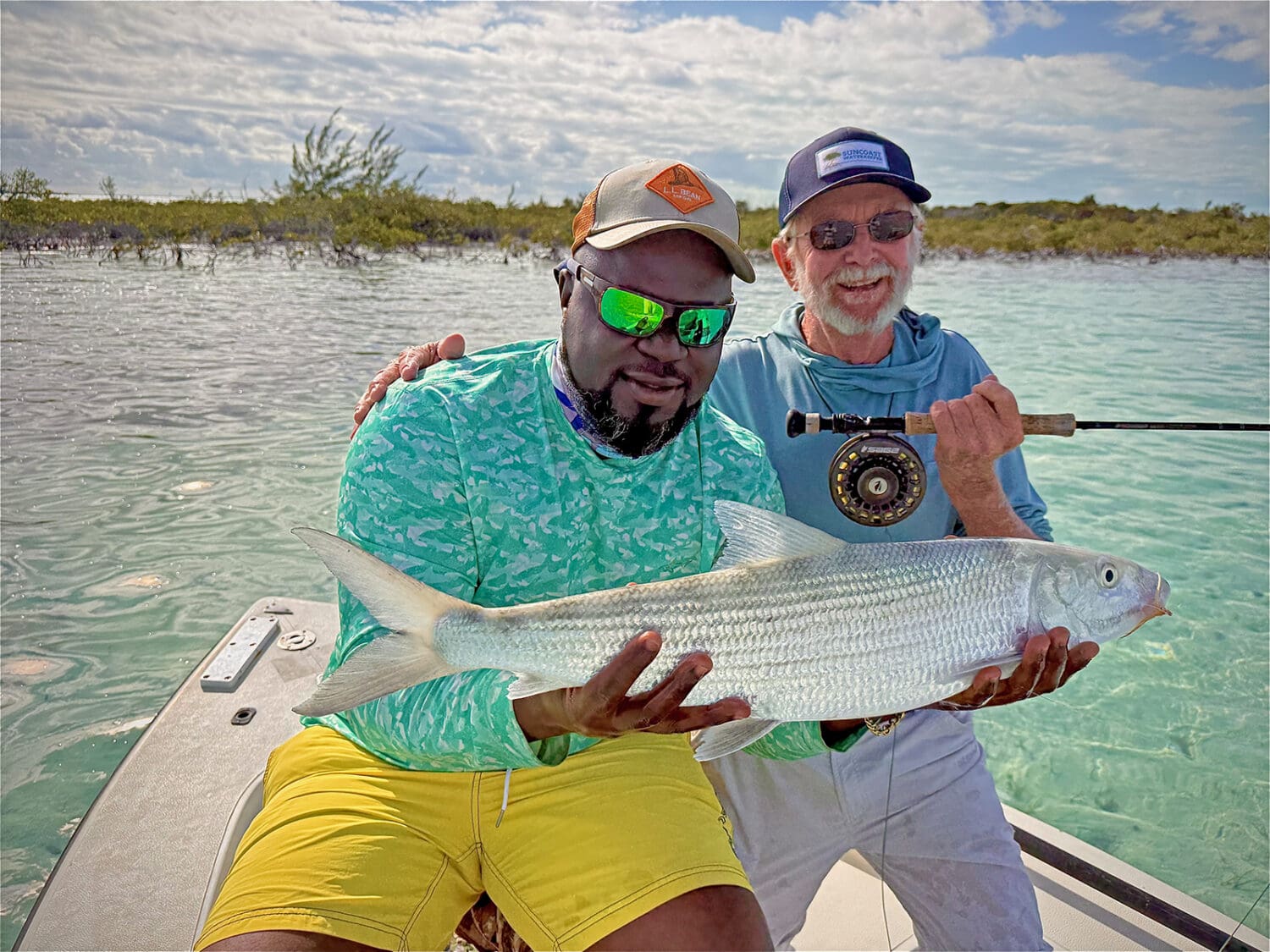
In my opinion the “holy grail” is landing a bonefish over 10 pounds. I’ve landed a few tarpon over 100 pounds, and a permit that pushed 40 pounds, but I had never managed to land a bonefish over 10 pounds. That all changed this past November when I fished the Middle Bight of Andros with Capt. Harry Neymour on a trip to Frankie’s Two Boys Inn.

Neymour’s roots run deep in the lore of bonefishing. His father, Charlie, uncle, Frankie, and grandfather, Ivan, have guided fly anglers in the waters near Behring Point for generations. Harry represents the new generation of the renowned family of fishing guides. On our fourth day of a six day trip, Harry and I were joined by Tampa angler and friend Leigh West.

As we rounded the bend from Cargill Creek onto the flats near Behring Point, Harry made the decision to head south and fish a small island in the middle bight, one he hadn’t fished in over a year. The weather was perfect with a 10-mph northeast breeze in a cloudless sky. Harry poled the boat along the edge of Big Lloyd Cay and after spotting and missing a couple of smaller fish, I heard Harry whisper, “Massive bonefish, 60 feet, one o’clock.”
As I swung my rod in that direction two large bonefish materialized about 40 feet away. Taking a deep breath, I raised my rod to the side to avoid spooking them and after one false cast, launched my fly, which landed about 15 feet from the cruising bones. As the fish approached, I waited for Harry to give me the word to start stripping. While I could see the fish, the Bahamian guides know just when to start a strip to make sure it’s close enough for the bonefish to see but not close enough to spook them. As the fish approached, it was hard to resist starting a strip, but I waited for Harry’s instructions. “Strip, strip, stop.”

There’s nothing more exciting than hearing those words and watching as the bonefish spots the fly and rushes over to inspect the perceived prey. “Strip, strip, stop – he’s got it!” came rapid fire as I did a strip strike and watched as the bone raced away, line and water flying from the spool. In short order, the bonefish was well into my backing as it suddenly changed course and headed for the mangrove shoreline. I applied as much pressure as I dared and used the drag and the rod to keep the fish out of the mangroves. Fortunately, the tide was just low enough to prevent the bonefish from running in or around the twisted roots and after several failed attempts it raced away from the structure towards deeper water. Then it was just a matter of applying constant pressure and working the fish to the boat. As I held my rod high, Harry reached down and expertly lifted the bonefish into the boat, proclaiming it to be close to 13 pounds. Finally, I had my first double-digit bonefish!

If you haven’t fished the Bahamas, I highly recommend the experience. While I’ve had the pleasure to fish multiple locations throughout the Bahamian archipelago, I can’t think of any place I would recommend for new and experienced anglers than Frankie’s Two Boys Inn. While you’re there make sure to ask for a day with Capt. Harry Neymour!