
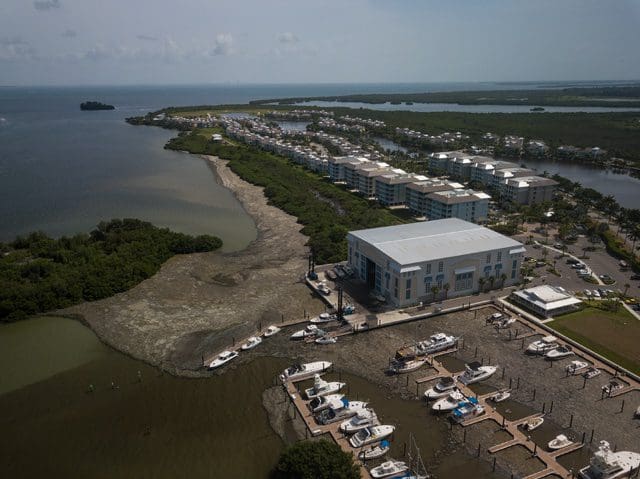
Tag: Anna Maria Island wetlands

Former county commissioner files wetlands ruling challenge

Reel Time: Former county commissioner files wetlands ruling challenge

The decision to reduce local wetland buffers to Florida state minimum standards by the Manatee County Commission has been challenged by former commissioner Joe McClash.

The policy couched by commissioners as ending a “taking of public property” was approved in a 5-1 vote on Oct. 5 despite strong opposition from the citizens of Manatee County and a “no” vote from the Manatee County Planning Commission.

Commissioner George Kruse voted against the change.

The rules change allows construction to occur closer to wetlands and, despite the commission’s claim (since debunked) that the current rules negatively affect 66,000 property owners in Manatee County, only two people with ties to development interests spoke in favor of the change.

Previously, environmental groups would have immediately challenged the ruling except for the recent passage of Senate Bill 540, which would make litigants in a case pay court costs if they lose. In the past, the prevailing party could ask for court costs, but this bill makes that automatic. The bill in effect limits public access to the courts.

According to McClash, “Challenging the elimination of our wetland policy by our county commissioners is a huge undertaking that needs community support. The decision is so wrong in many ways. There was no science to support the decision. The disrespect shown by the commissioners to the public at the meetings could only be described as surreal. The biggest reason is the unknown impacts on our coastal environment. We know certain trends are evident. Our water quality trend is not great; with excessive fish kills, excessive Lyngbya (poopy algae), and even people getting severe infections from swimming in our waters. We know the sea level is rising. We know wetland buffers, especially in the coastal areas, are critical to mangrove adaptation and the so-called “engineering solution” can’t replace the value of the current 50 feet of land required for mangroves to survive. Without mangroves, our whole coastal ecosystem collapses.

“I did not want to challenge the county’s action,” McClash continued. “However, the state changed the rules last year to require if you don’t win, you have to pay all the cost of the challenge. The environmental groups that normally challenge the absurd actions of the government are now having to make a financial decision. We have our local state representatives Will Robinson and Jim Boyd to thank for this favor to the developers. However, this decision by the county was so egregious it needed to be challenged. If our citizens can’t afford to challenge the wrong decisions of our government then we become a dictatorship. The county’s decision to eliminate our wetland policies and wetland buffers was not done in the best interest of the public, it certainly was done in the best interest of the developers.”

McClash is to be applauded for this decision and this action must be supported by members of the public who understand the importance of protecting the natural environment that brought us here, who love to fish and who support the economy. Stay tuned for more information as this process unfolds. McClash can be reached at joemcclash@gmail.com.
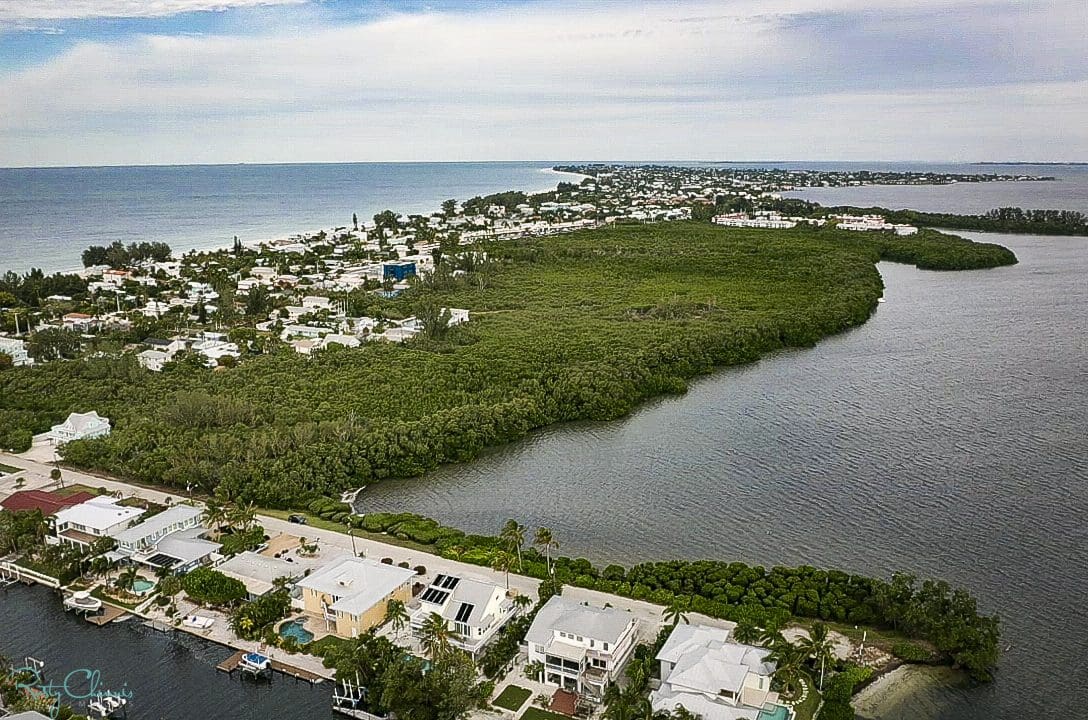
County commissioners vote to reduce wetland buffers

County commissioners vote to reduce wetland buffers

BRADENTON – Manatee County commissioners reduced wetland buffers in a 5-1 vote on Oct. 5, defaulting to the less restrictive state of Florida minimums from more restrictive county standards.

Buffers between sensitive wetlands and new upland development are reduced from 50 feet to 25 feet. Buffers between outflowing wetlands and new upland development are reduced from 30 feet to 15 feet.

Prior to the public comment session of the meeting, Commissioner Kevin Van Ostenbridge gave an indication that he would not be swayed by the upcoming speakers.

“The government is being asked to provide a land buffer – that’s the taking of property rights away from the citizen,” he said. “Is the juice worth the squeeze? That’s the ultimate question here.”

His conversation then took a political turn. He said he felt the board was being targeted by “radical climate activists” because the board is comprised of Republicans, and claimed that environmental groups were using children as “political pawns.”

The remarks drew groans from the audience.

Commissioner Mike Rahn said, “I’d like to get back to stormwater questions and concerns.”

During the public comment portion of the land use meeting, more than 30 people, including representatives from the scientific community and private citizens, spoke during the four-hour public hearing. Additionally, nearly 500 public comments were emailed to commissioners prior to the meeting, most opposed to a reduction in wetland protections.

Brice Claypool, 15, represented environmental advocacy group Kids for Clean Water at the meeting.

“I’m not a political pawn,” he said. “People ask me why are you doing this? And that’s because I love our local environment. I’ve been watching terrible things happen to our environment. I fear everything I love about our community is at risk of being lost. We need to start taking care of our waters. I’ve been dismayed by this board reducing protections for our waters despite the papers and evidence to support this.”

Claypool presented an open letter to the commission signed by 100 local youth.

Colin Curtis outlined what he sees as threats to the local environment.

“I’m a fisherman and I’ve seen the demise of water quality in Manatee County,” Curtis said. “We have three things going against us in Manatee. First, It’s low elevation, which means a slow drainage of our contaminants. Having a narrow buffer zone exacerbates this process. Second we have a low tidal exchange. This is not enough to clean our rivers and estuaries of the contaminants including fertilizers that sink to the bottom. Third and most importantly are the overzealous developers, assisted by you guys. The common people of this county deserve clean water over the profits of developers.”

Glenn Compton spoke on behalf of ManaSota-88, a non-profit organization with a stated goal of protecting the public’s health and the preservation of the environment.

“We own four lots in Manatee County, they would be described as coastal wetlands,” Compton said. “We don’t feel there’s a government taking of our property, because you can’t do things like take down the mangroves or build a seawall. We feel there are rules and regulations in place that need to be followed for the benefit of the community and the environment. So we don’t believe the idea that wetland buffers is a taking of land by the government.”

Compton said that the board is expanding the role of government by encouraging development in a flood-prone area.

“You’re going to have to provide services when the storm comes,” he said. “You’ll probably have to have federal flood insurance programs that will become more numerous in Manatee County. After the storm has passed, you’re going to have to deal with post-storm assistance which will be a cost to the taxpayers. This is an expansion of government into private property rights.”

Ken Piper said the purpose of this proposal is to “continue a policy of easy development for crony capitalists.”

“This proposal subjects the county to more state control,” Piper said. “True conservatives wish to retain local control while favoring smaller government. The problem with protecting the fee simple property rights of developers is that ignores the property rights of the rest of us. The problem is you are claiming you are enhancing the property rights of the developer and you’re forgetting about the taxpayers’ investments through their property and their infrastructure.”

Chris Costello of the Sierra Club asked the board not to make this a partisan issue.

“It can’t be political, it can’t be partisan,” she said. “I refuse to believe Republicans care less. Your decision today will decrease protections. Do not make this a partisan issue, please.”

John Mast, representing the Manatee-Sarasota Building Industry Association, spoke in favor of the amendment.

“The primary objective of changing the comprehensive plan is to streamline and smooth the efficiency of the permitting process,” Mast said. “This alteration aims to minimize duplication in government regulations, ultimately reducing the time required for permitting procedures.”

Abbey Tyrna, executive director of Suncoast Waterkeeper, spoke to the board.

“I’m here not only representing Suncoast Waterkeeper, but the 2,331 signatures we received on our Save Our Wetlands petition,” she said. “We’re eliminating protections for all viable wetlands.”

Rusty Chinnis, of Suncoast Waterkeeper and The Sun’s outdoors columnist, said more protections, not less, should be in place to protect the water.

“This is not being anti-development. Development is going to happen, but we need to consider smart development,” said Chinnis, a former builder. “Please carefully consider what you’re doing here. Everybody who comes here, who buys these homes here, come here because of the water quality. These are our waters. We shouldn’t be looking to the state. We should be looking to Manatee County and concerned, wise and informed commissioners.”

At the end of the meeting, Commissioner Jason Bearden made a motion to approve the change to the comprehensive plan. The motion was seconded by Van Ostenbridge, with a 5-1 vote in favor. Commissioner Ray Turner was absent from the Oct. 5 meeting. Commissioner George Kruse cast the lone dissenting vote.

The ordinance reads in part: “Adoption of an ordinance of the Board of County Commissioners of Manatee County… amending policy herein so that the county’s wetland impact mitigation standard and its wetland buffers requirements for isolated wetlands is consistent with state standards; allowing for engineering solutions to be considered adjacent to environmentally sensitive coastal wetlands; deleting text from the above-cited objectives regarding wetlands to achieve consistency with state standards.”

The hearing was the second on the reduction of wetland buffers. The first, on Aug. 17, ended in a 6-1 vote in favor of transmitting a comprehensive plan text amendment to the state of Florida, effectively reducing Manatee County wetland buffers. Kruse was also the lone voice of dissent in that vote.

Vote could reduce wetlands protection

BRADENTON – In response to a preliminary Manatee County commission vote to reduce wetland buffers on Aug. 17, the environmental community is making it clear that scientific evidence backs up the importance of wetland protection.

In a press release announcing a Sept. 26 Value of Wetlands Science panel discussion sponsored by the environmental advocacy group Suncoast Waterkeeper, its executive director, Dr. Abbey Tyrna, began with a quote from County Commissioner Kevin Van Ostenbridge, who said at the August meeting, “I’m not being shown any data to back up good intentions.”

Tyrna noted that the Aug. 17 meeting had four hours of public comment and included both passion and logic from scientists, engineers, professionals and residents opposing the change.

“(Van Ostenbridge) is just one of the six Manatee County commissioners

in charge of protecting remaining wetlands and aquatic buffers under the Manatee County Comprehensive Plan who claim there is insufficient science to support current policies,” she wrote. “In the face of outright disapproval from their constituents, the board still voted 6-1 (to reduce local wetland buffers), with the only opposing vote coming from Commissioner (George) Kruse.”

On Thursday, Oct. 5 at 9 a.m., Manatee County commissioners will consider adopting an ordinance to amend the comprehensive plan to “achieve consistency with state standards” for wetlands.

The proposed changes include eliminating the 50-foot wetland buffer requirement along inflowing watercourses and reducing wetland buffers from 50 feet to the state minimum of 15 feet and an average of 25 feet for Outstanding Florida Waters and Aquatic Preserves.

“If it’s true that all the Board of County Commissioners need is scientific data, then we are in luck – there are plenty of scientific studies on wetlands and water quality being conducted across the state,” Tyrna wrote.

“This panel is a continued effort to save our wetlands and follows a public petition which has garnered 2,168 signatures and counting,” she wrote. “Other organizations supporting this fight include ManaSota-88, East Manatee Preservation, Waterline Road Preservation Group, Speak Out Manatee, Florida Kids for Clean Water, Manatee League of Women Voters and Manatee Fish and Game.”

The Sept. 26 science panel at the Bradenton Woman’s Club drew more than 150 people including Kruse, the lone voice of dissent in the 6-1 commission vote.

“All we heard on that board (of county commissioners) was there was no science behind this,” Kruse said. “I knew that wasn’t true. It may be one thing to disagree with the science, but the science is definitely there.”

He said he attended the panel discussion an as audience member to hear speakers with firsthand knowledge of wetland science.

“I know there will be at least one vote against this” at the Oct. 5 meeting, Kruse said, referring to himself. “We just need three more.”

Speakers at the Sept. 26 Value of Wetlands Science Panel at the Bradenton Woman’s Club were Ed Sherwood, executive director of the Tampa Bay Estuary Program, A.J. Reisinger, assistant professor of Urban Soil and Water Quality at the University of Florida and Jim Bays, president of Stewards of Our Lakes (SoUL.)

Tyrna moderated the discussion. Each speaker spoke for 15 minutes and the presentation was followed by a question and answer period.

“Tampa Bay is one of 28 national estuary programs established by Congress as estuaries of national significance,” Sherwood said. “We’re interested in protecting wetlands because our estuary is continuing to be urbanized. We only have about 32% of the natural lands undeveloped in the watershed.”

Sherwood said habitats that are key to fish and wildlife have been lost as land development is expected to increase.

“There’s not enough space,” Sherwood said. “A lot of it has already been developed and those opportunities don’t exist. So we need to do our best with what we have now to look at our existing native habitats while looking for new and novel ways to expand our opportunities.”

It’s taking more and more effort to find those restoration opportunities, he said.

“In the past 30 years, we’ve lost about 180,000 acres of opportunity,” Sherwood said. “Development that’s going on has outpaced our ability to restore these key habitats. We’ve converted restorable lands to developed lands. We need to continue to make investments in restoring these key habitats.”

In addition to environmental benefits, Sherwood said the watershed has economic benefits.

“In Manatee County alone, there’s about $70 million in flood protection benefits just from the wetlands over a 30-year period,” he said. “There’s both economic and intrinsic value to these habitats.”

Resinger discussed scientific studies showing the role of stormwater systems role in flood control and the enhancement of water quality.

Bays outlined other benefits of wetland buffers.

“It’s not just the wetlands that are important, but the areas around them,” Bays said. “They remove pollutants, provide water storage and preserve habitat for animals that live along the perimeter.”

Other ancillary benefits include opportunities to grow plants that will mitigate the effects of climate change, provide trails for such activities as birdwatching and have an aesthetic value, he said.

“A 30- to 50-foot buffer is needed to achieve nutrient removal and protect wildlife,” he said.

During a question and answer period, Tyrna read a question submitted by an audience member.

“What do you say to people who do not believe in science to guide decision-making?” she read.

All three panelists agreed that conversation is key.

“I think we live, work and play in the Tampa Bay region because of certain aesthetics,” Sherwood said. “At the end of the day, I think we can have common conversations about what makes Tampa Bay special.”

“You need to figure out connections and reach people where they are,” Reisinger said.

“I would first ask them what is guiding your decisions,” Bay said. “I believe it’s a matter of education and outreach for those folks.”

Meeting attendees received cards with information about the upcoming Thursday, Oct. 5 meeting at the Honorable Patricia M. Glass Chambers at the Manatee County Administration Building, 1112 Manatee Ave. W. in Bradenton, suggesting that parties meet, call or email their county commissioners to register their opposition and attend the meeting.